



★ Organically grown on our farm
Merrimack Sweetheart Watermelon is a rare heirloom variety originally introduced by the Billy Helper Seed Company during the late 1940s. Carefully refined by the Billy Helper family for successful cultivation in northeastern climates, this historic watermelon remains prized for its exceptional flavor, vigorous growth, and rich agricultural heritage.
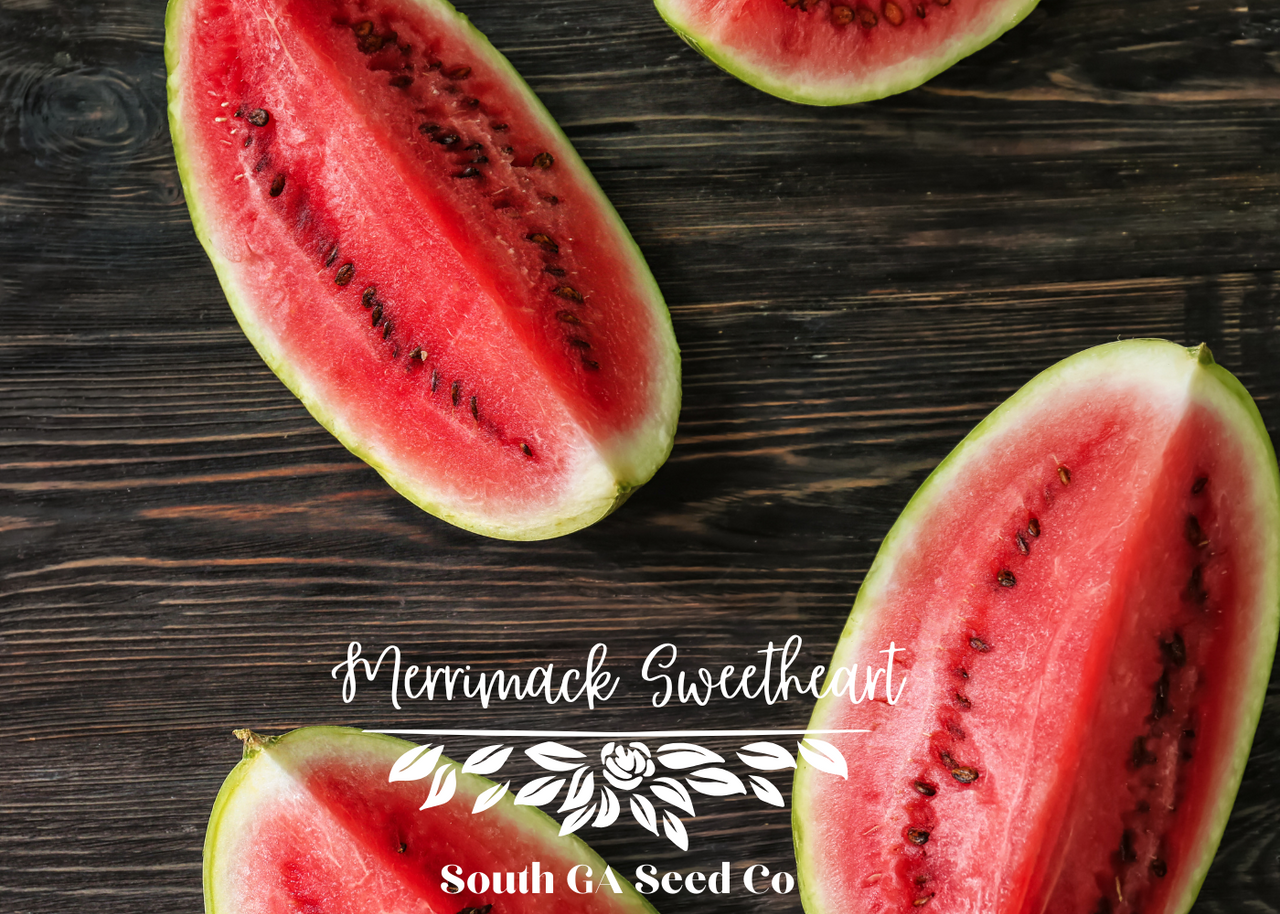
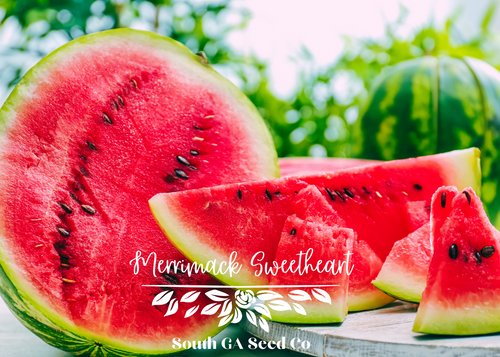
Originally originating from Japan, Merrimack Sweetheart Watermelon produces beautiful deep pink flesh with a classic old-fashioned watermelon flavor that is both sweet and refreshing. Its compact icebox size makes it ideal for smaller gardens, raised beds, and gardeners who prefer manageable-sized melons.
The vigorous vines are known for their hardiness and dependable yields, thriving in full sun and warm growing conditions. Reintroduced by South GA Seed Co., this heirloom watermelon offers gardeners the opportunity to enjoy a flavorful piece of agricultural history while producing delicious summer harvests.
Merrimack Sweetheart Watermelon Seed Details
- Quantity: 15 Seeds
- Seed Planting Depth: 1 Inch
- Germination Temperature: 75–80°F
- Days to Germination: 3–10 Days
- Row Spacing: 6 Feet
- Plant Spacing: 3 Feet
- 100-Foot Row Yield: Approx. 55 lbs
- Sun Requirements: Full Sun
- Harvest Time: Approximately 80 Days
How to Save Merrimack Sweetheart Watermelon Seeds
Merrimack Sweetheart Watermelons can cross-pollinate with other watermelon varieties, so proper isolation is important for seed saving. To maintain seed purity, separate different watermelon varieties by approximately 1/4 mile whenever possible.
Allow watermelons to fully ripen on the vine before harvesting seeds. Mature melons typically produce fully developed seeds that are ready for collection once the fruit is ripe.
After harvesting, cut the watermelon open and scoop out the seeds from the flesh. Rinse the seeds thoroughly in water to remove excess pulp and sugars. Spread the cleaned seeds out on a paper towel, screen, or drying rack in a well-ventilated area and allow them to dry completely before storing them in a cool, dry location for future planting seasons.


