
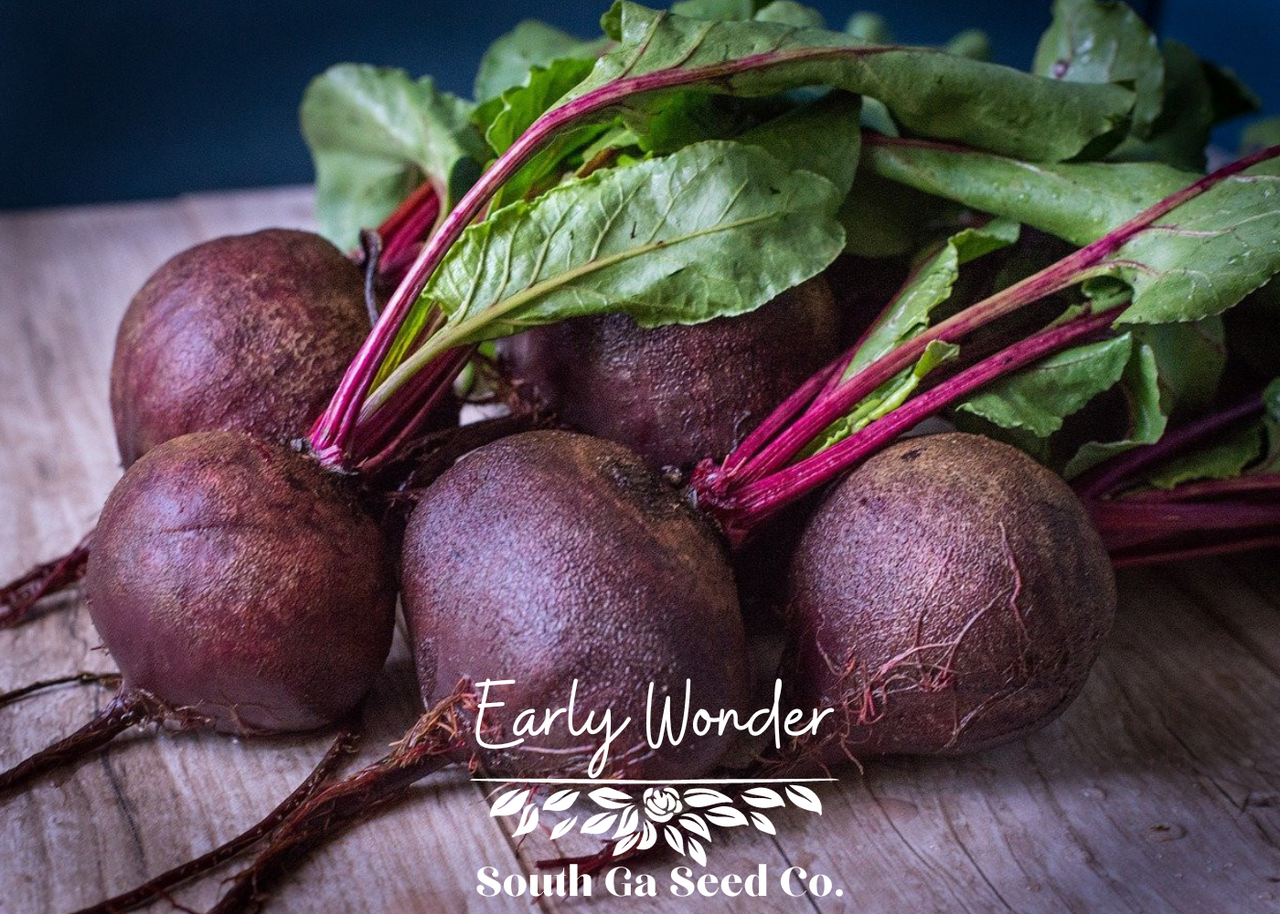

Early Wonder beet is a classic heirloom variety admired for its deep crimson roots, vibrant red-veined greens, and dependable early harvests. The richly colored bulbs stand out beautifully against lush green foliage, creating a striking display in both vegetable gardens and ornamental edible landscapes.
These tender sweet roots offer a rich earthy flavor with subtle sweetness that makes them excellent for roasting, boiling, pickling, juicing, and fresh garden cooking. Beyond the roots, the nutritious greens are equally valuable and delicious when sautéed, steamed, or added fresh to salads and soups.
Early Wonder beets are highly adaptable and thrive in a variety of soil conditions, though they perform best in fertile well-drained loamy soil enriched with organic matter. Their reliable growth and minimal maintenance requirements make them ideal for both beginning and experienced gardeners alike. Regular watering and occasional weeding are generally all that is needed for healthy productive plants.
Beautiful, flavorful, and highly nutritious, Early Wonder beet remains one of the finest heirloom beet varieties for dependable harvests and exceptional culinary versatility.
Early Wonder Beet Seed Details
- Quantity: 100 Seeds
- Plant Type: Heirloom Beet
- Root Color: Deep Crimson Red
- Leaf Color: Green with Red Veins
- Flavor: Sweet, Earthy, Tender
- Best Uses: Roasting, Pickling, Salads, Juicing, Sautéed Greens
- Seed Planting Depth: 1/2 Inch
- Germination Temperature: 55-65°F
- Days to Germination: 5-7 Days
- Row Spacing: 4 Inches
- Plant Spacing: 3 Inches
- 100' Row Yield: 45 Pounds
- Sun Requirements: Full Sun
- Harvest Time: Approximately 56 Days
- Special Features: Early Maturing, Edible Greens, Excellent Flavor
How to Save Seeds
Beets will cross-pollinate with other beet varieties as well as Swiss chard varieties, so proper isolation is important for maintaining seed purity.
For best results, grow only one beet or chard variety nearby or separate varieties by approximately 3/4 of a mile.
Beets are biennial plants and require overwintering before they will produce seed during the second growing season. In colder climates, gardeners often lift the roots, trim foliage to about 2 inches above the crown, and store them in damp sand or sawdust within a cool root cellar.
Replant overwintered roots in spring and allow seed stalks to fully mature and dry before harvesting and storing the seeds for future planting.