
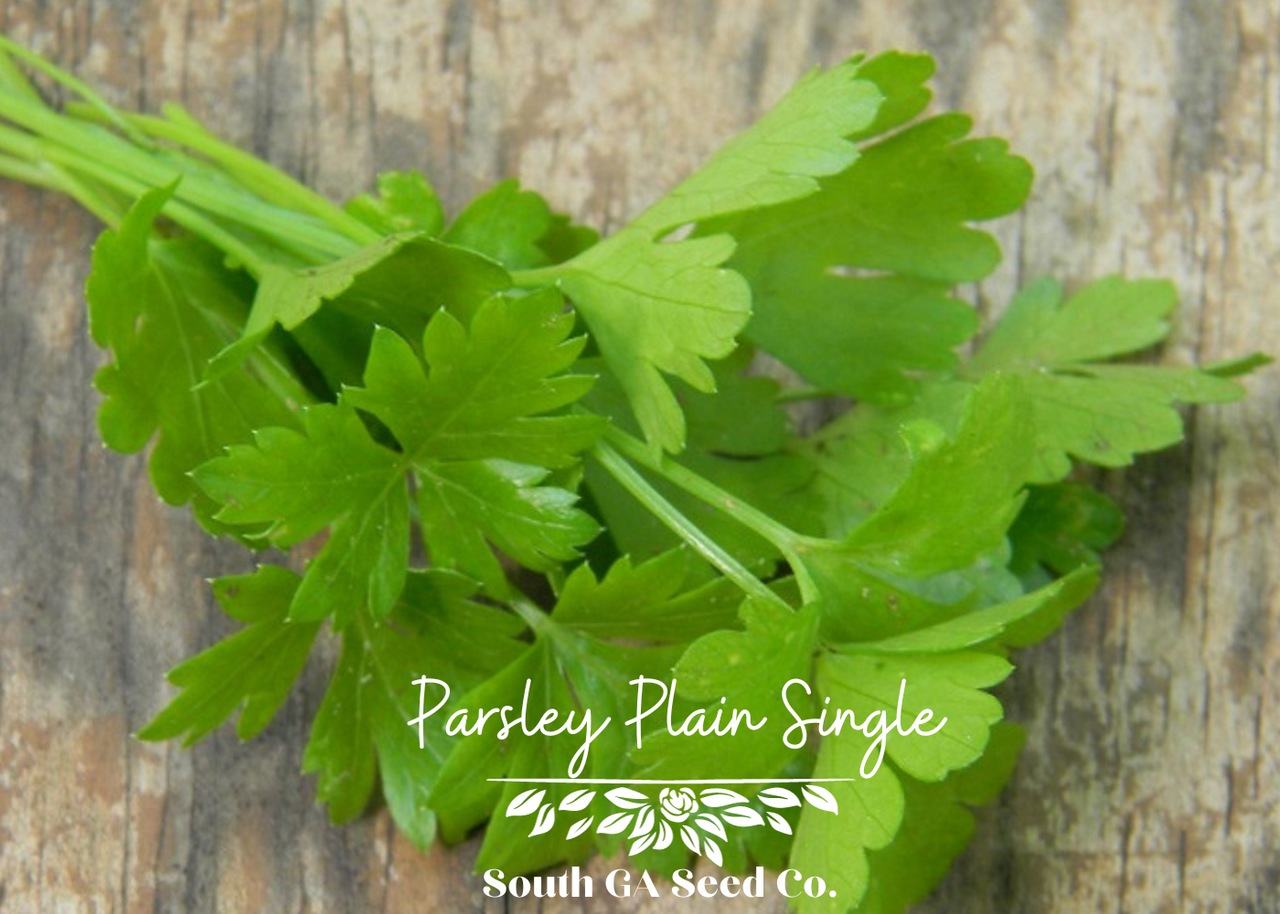

Single Curled Parsley is a classic heirloom herb prized for its finely curled dark green foliage, mild flavor, and ornamental beauty. A member of the Apiaceae family, Petroselinum crispum var. crispum has long been cultivated as both a culinary herb and decorative garden plant. Its tightly curled leaves provide attractive texture in the garden while supplying a steady harvest of fresh herbs throughout the growing season.
The flavorful leaves offer a mild, fresh taste that complements soups, stews, salads, sauces, vegetables, and countless other dishes. Single Curled Parsley is especially popular as a garnish due to its attractive appearance, but it is equally valued for its culinary versatility and nutritional benefits. Rich in vitamins and minerals, it is a staple herb in kitchens around the world.
This hardy biennial herb thrives in fertile, well-drained soil with a neutral to slightly acidic pH and performs best in full sun to partial shade. Parsley requires consistent moisture for optimal growth and benefits from regular harvesting, which encourages vigorous new foliage. Although somewhat slow to germinate, established plants provide continuous harvests throughout much of the growing season.
Easy to grow, highly productive, and exceptionally versatile, Single Curled Parsley remains one of the most popular culinary herbs for gardeners seeking attractive foliage, dependable harvests, and outstanding flavor for both fresh and cooked dishes.
Single Curled Parsley Seed Details
- Quantity: 75 Seeds
- Plant Type: Heirloom Biennial Herb
- Family: Apiaceae
- Scientific Name: Petroselinum crispum var. crispum
- Plant Appearance: Tightly Curled Dark Green Leaves
- Flavor: Mild, Fresh, and Herbaceous
- Best Uses: Garnishes, Salads, Soups, Stews, Sauces, Fresh Cooking
- Seed Planting Depth: 1/4 Inch
- Germination Temperature: 60-70°F
- Days to Germination: 14-21 Days
- Plant Spacing: 6-8 Inches
- Mature Height: 12-18 Inches
- Sun Requirements: Full Sun to Partial Shade
- USDA Zones: 4-9
- Special Features: Attractive Curled Foliage, Excellent Garnish Herb, Continuous Harvests, Easy to Grow
How to Save Seeds
Parsley is insect-pollinated and may cross-pollinate with other parsley varieties. To maintain varietal purity, isolate flowering plants whenever possible and save seed from healthy, vigorous specimens.
Because parsley is a biennial plant, it typically produces seeds during its second growing season. Allow selected plants to overwinter and develop tall flowering stalks the following year.
After flowering, clusters of seeds will form and gradually mature from green to tan or brown. Allow the seed heads to dry naturally on the plant before harvesting.
Once the seed heads are fully dry, cut them from the plant and place them in a paper bag or on a clean surface. Separate the seeds from the dried plant material and store them in a cool, dry location for future planting.