
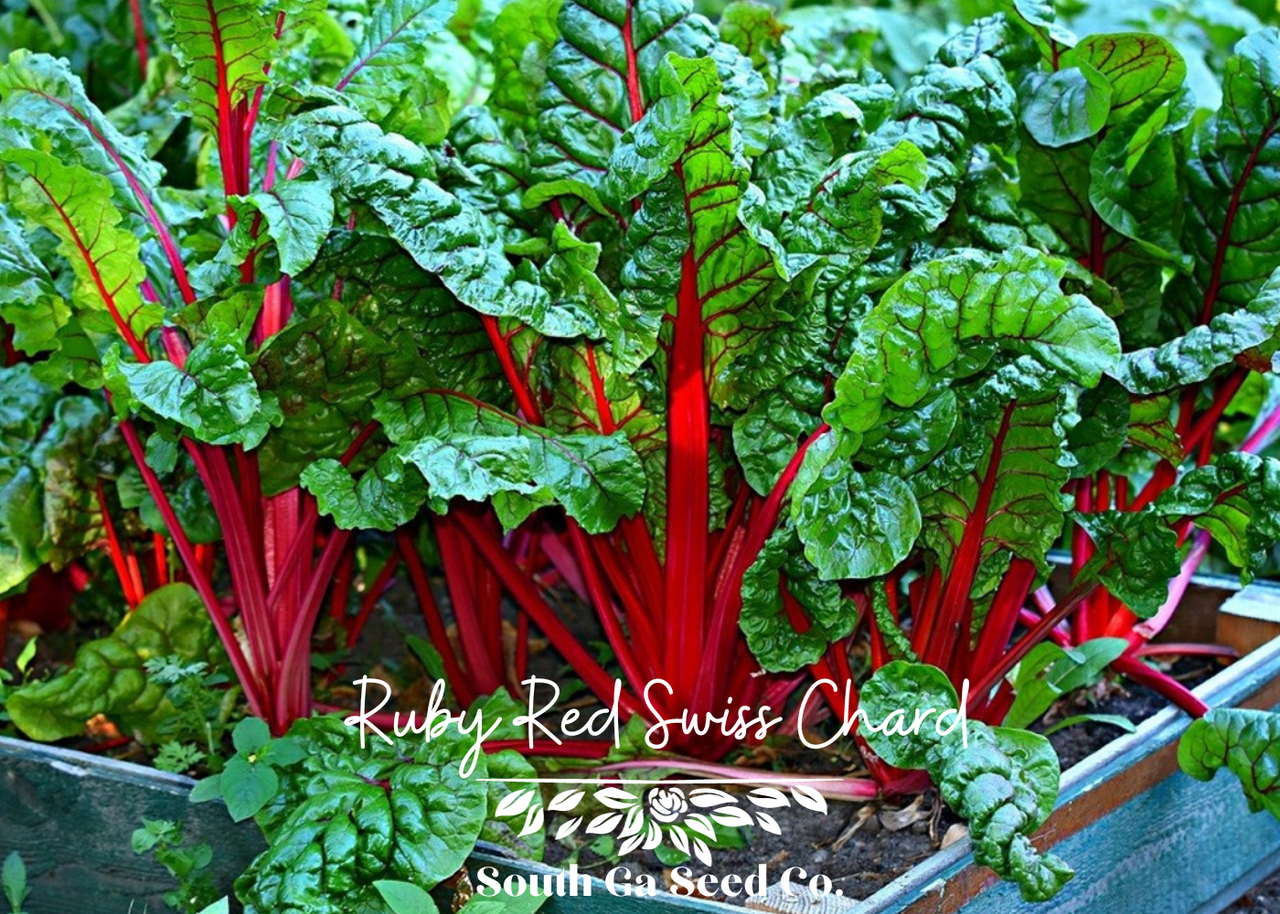


Ruby Red Swiss Chard is a stunning heirloom leafy green prized for its brilliant crimson stalks and deep green crinkled leaves. A member of the beet family, this highly nutritious vegetable is both ornamental and delicious, making it a favorite among gardeners, homesteaders, and chefs alike.
Its mild earthy flavor with a slight pleasant bitterness makes Ruby Red Swiss Chard incredibly versatile in the kitchen. Young leaves are excellent fresh in salads, while mature leaves and stalks are perfect for sautés, soups, stir-fries, pasta dishes, and casseroles. The colorful stems cook similarly to celery or asparagus and add beautiful color and texture to meals.
This hardy and productive variety thrives in a wide range of growing conditions and tolerates cooler temperatures better than many leafy greens. Regular harvesting encourages continuous new growth throughout the season, providing an abundant harvest over a long period.
Ruby Red Swiss Chard is an excellent choice for raised beds, kitchen gardens, market gardens, and edible landscaping thanks to its beauty, nutrition, and reliable production.
Ruby Red Swiss Chard Seed Details
- Quantity: 100 Seeds
- Plant Type: Heirloom Swiss Chard
- Leaf Color: Deep Green
- Stem Color: Bright Crimson Red
- Flavor: Mild Earthy Flavor with Slight Bitterness
- Seed Planting Depth: 1/2 Inch
- Germination Temperature: 50-75°F
- Days to Germination: 7-10 Days
- Row Spacing: 18-24 Inches
- Plant Spacing: 6-12 Inches
- Sun Requirements: Full Sun to Partial Shade
- Harvest Time: Approximately 57 Days
- Ideal Uses: Salads, Sautés, Soups, Stir-Fries, Pasta Dishes, Edible Landscaping, Market Gardens, Homesteads
How to Save Seeds
Swiss chard will cross-pollinate with other Swiss chard varieties as well as beet varieties, so isolation is important for maintaining pure seed. Separate varieties by at least 3/4 of a mile whenever possible.
Swiss chard is biennial, meaning plants must survive through winter before producing seed during their second growing season.
In colder climates, gardeners often dig the plants before hard freezes, trim leaves back to about 2 inches above the crown, and store the roots in damp sand or sawdust inside a cool root cellar.
In milder climates, plants may successfully overwinter outdoors with heavy mulch protection.
Once spring arrives, replant stored roots or allow overwintered plants to resume growth. Seed stalks will eventually form and mature. Harvest seeds once fully dry and store them in a cool dry location for future planting.


