
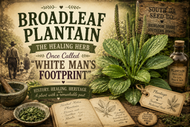
Broadleaf Plantain: The Healing Herb Once Called “White Man’s Footprint”
Posted by Jennifer Dixon on 22nd May 2026
Broadleaf Plantain: The Healing Herb Once Called “White Man’s Footprint”
Long before modern lawns and sidewalks covered the countryside, Broadleaf Plantain quietly followed people wherever they traveled.
This humble herb — often dismissed today as a common weed — has a history deeply woven into both herbal medicine and early American history. Found growing along pathways, homesteads, gardens, and wagon trails, Broadleaf Plantain became so closely associated with European settlement that many Native American tribes gave it a remarkable nickname:
“White Man’s Footprint.”
The name came from the observation that wherever settlers traveled, plantain seemed to appear soon after.
But despite its ordinary appearance, Broadleaf Plantain has long been valued as one of nature’s most dependable healing plants.
At South GA Seed Co., we believe some of the most useful plants are often the ones growing quietly beneath our feet.
A Weed With a Remarkable History
Broadleaf Plantain, or Plantago major, is believed to have originated in Europe and parts of Asia before spreading throughout North America during colonization.
Its seeds traveled unknowingly:
-
in livestock feed
-
on wagon wheels
-
in muddy boots
-
among crop seed
-
along trade routes
As settlers expanded westward, plantain followed.
Many Native American communities noticed this pattern and began referring to the herb as “White Man’s Footprint” because it seemed to spring up wherever European settlers disturbed the land.
Yet despite the difficult history surrounding its spread, many Indigenous groups also recognized plantain’s powerful medicinal value and incorporated it into traditional herbal practices.
Why Herbalists Valued Plantain for Generations
For centuries, Broadleaf Plantain earned a reputation as a reliable healing herb throughout Europe and early America.
Traditionally, plantain leaves were used for:
-
insect bites
-
bee stings
-
minor cuts
-
skin irritation
-
burns
-
splinters
-
rashes
Fresh leaves were often crushed into poultices and applied directly to the skin.
Many old herbal traditions viewed plantain as a gentle “drawing herb,” believed to help pull irritation from wounds while soothing inflammation.
Even today, many homesteaders and herbal gardeners continue growing plantain specifically for homemade salves, teas, oils, and natural remedies.
A Survivor in Tough Conditions
Part of what makes Broadleaf Plantain so fascinating is its resilience.
This hardy plant thrives in:
-
compacted soil
-
pathways
-
garden edges
-
disturbed ground
-
drought conditions
-
poor soil
Its broad leaves hug the ground closely while deep roots help it survive difficult environments where other plants struggle.
In many ways, plantain became symbolic of endurance and adaptability.
Broadleaf Plantain and the Pollinator Garden
Though often overlooked, plantain also plays a small but valuable ecological role.
Its flowers and seeds help support:
-
native insects
-
birds
-
pollinators
-
beneficial wildlife
Allowing useful “weeds” to coexist naturally in parts of the garden can often create healthier ecosystems overall.
Older Southern gardens rarely aimed for perfect uniformity. Instead, many gardeners understood that diversity created resilience.
Growing Broadleaf Plantain at Home
Broadleaf Plantain is incredibly easy to grow.
Seeds can be directly sown into:
-
herb gardens
-
pollinator gardens
-
medicinal gardens
-
cottage gardens
-
wildflower spaces
Plantain prefers:
-
full sun to partial shade
-
average soil
-
moderate moisture
Once established, it requires very little care and often reseeds naturally.
For many gardeners, plantain becomes less of a weed and more of a trusted companion plant.
Rediscovering the Value of Forgotten Herbs
Modern life often teaches us to remove plants before learning what they are.
But older generations frequently viewed common herbs differently. Plants like Broadleaf Plantain were not considered nuisances — they were useful, dependable, and deeply connected to everyday life.
As more gardeners rediscover heirloom herbs and traditional plant knowledge, Broadleaf Plantain continues finding its place once again in herbal gardens and homesteads across the South.
Sometimes the plants we overlook most carry the oldest stories.
To order Seed Click Here
FDA Disclaimer: The information provided in this article is for educational and historical purposes only and is not intended to diagnose, treat, cure, or prevent any disease. Statements regarding herbal remedies and traditional plant uses have not been evaluated by the Food and Drug Administration. Always consult a qualified healthcare professional before using herbal products, especially if pregnant, nursing, taking medications, or managing a medical condition.