
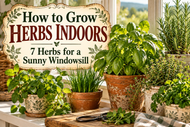
How to Grow Herbs Indoors: 7 Herbs for a Sunny Windowsill
Posted by Jennifer Dixon on 24th Oct 2026
There is something special about having fresh herbs growing in your home. You can be cooking supper, reach over to your windowsill, snip a few leaves of basil or parsley, and add them straight to the pot. Fresh herbs bring wonderful flavor to our meals, and you don't need a large garden to enjoy them.
One of the nice things about growing herbs is that you can grow many of them in containers. Even if you live in an apartment, have a small kitchen, or don't have much room outside, you can still enjoy growing a few of your own.
But indoor herb gardening does have its challenges. A plant that thrives outside in the sunshine may struggle inside a house, especially during the darker winter months. The good news is that choosing suitable herbs and giving them the right conditions can make a real difference.
Let's look at seven herbs you can grow indoors, how to care for them, and a few common mistakes to avoid along the way.
────────────────────────────────────────
Why Grow Herbs Indoors?
Growing herbs indoors gives you a convenient way to enjoy fresh flavor throughout the year. You can grow them near your kitchen, keep a few pots on a sunny windowsill, or set up a small growing area with supplemental lighting.
Here are a few reasons to give it a try:
-
Fresh herbs are close at hand when you're cooking.
-
You can grow herbs even without a traditional garden.
-
You can start seeds indoors and learn how each plant grows.
-
Small pots take up relatively little space.
-
You can bring certain container-grown herbs inside before cold weather arrives.
Indoor herbs generally grow more slowly and produce less foliage than herbs growing outdoors in favorable conditions. That doesn't mean you can't have success. It simply means you need to work with the growing conditions you have.
────────────────────────────────────────
7 Herbs to Grow on a Sunny Windowsill
-
Basil
Basil is one of my favorite herbs to recommend to gardeners who enjoy cooking. Its fresh leaves are wonderful in tomato dishes, pasta sauces, salads, and homemade pesto.
Basil likes warmth, good light, and consistently lightly moist soil. Place it in your sunniest window, preferably one that receives several hours of direct sunlight. If your window doesn't provide enough light, a grow light can help.
Keep the soil moist but not soggy, and pinch growing tips to encourage branching. Avoid removing too many leaves at once, especially while the plant is young.
Basil is a warm-weather herb, so protect it from cold drafts and chilly windows during winter.
-
Chives
Chives are a useful choice for a small indoor herb garden. Their mild onion flavor works well in eggs, potatoes, soups, salads, and cream cheese.
They grow in clumps and can be harvested by snipping the green leaves with scissors. Leave enough foliage for the plant to continue growing.
Chives appreciate good light, although they can tolerate somewhat less direct sunlight than some other herbs. Keep the potting mix lightly moist without allowing the roots to sit in water.
If you're looking for an herb that can be harvested in small amounts as needed, chives are worth considering.
-
Parsley
Parsley is more than a garnish. It adds fresh flavor to soups, sauces, vegetables, and many other dishes.
Both curly-leaf and flat-leaf parsley can be grown in containers. Parsley prefers bright light and evenly moist soil. It generally appreciates a little more moisture than Mediterranean herbs such as thyme and oregano.
One thing to know about parsley is that its seeds can be slow to germinate. Don't give up on the pot after only a few days. Keep the growing medium appropriately moist and give the seeds time.
When harvesting, snip the outer stems near the base rather than cutting off every leaf at once.
-
Mint
Mint is a wonderful herb for tea, cold drinks, fruit dishes, and other kitchen uses. It can also be a good choice for indoor growing because it tolerates less direct sunlight than many sun-loving herbs.
Mint likes consistent moisture, but its roots still need oxygen and good drainage. Water when the surface of the potting mix begins to dry, rather than keeping the soil constantly soggy.
I recommend growing mint in its own container. It spreads readily when grown outdoors, and a separate pot makes it much easier to manage.
Give it bright light, regular harvesting, and enough room for its roots. You'll have a handy supply of fresh leaves within reach.
-
Oregano
Oregano is a useful kitchen herb, particularly for tomato sauces, roasted vegetables, and Mediterranean-style cooking.
Unlike mint and parsley, oregano prefers a well-drained growing medium and should be allowed to dry somewhat between waterings. It needs good light to grow compactly and maintain healthy foliage.
Avoid planting oregano in an oversized pot filled with soil that stays wet for too long. A container with drainage holes and a suitable potting mix will help prevent soggy roots.
Harvest small amounts regularly to encourage branching and keep the plant from becoming overly leggy.
-
Thyme
Thyme is a small, fragrant herb that works beautifully in soups, roasted vegetables, poultry dishes, and seasoning blends.
It prefers plenty of light and soil that drains well. Let the growing medium dry somewhat between waterings, and don't leave the pot sitting in a saucer full of water.
Thyme can be more challenging indoors if the room is dim. A bright window or supplemental grow light may be necessary, particularly during winter.
Because thyme has a naturally compact growth habit, it can be a good fit for a small herb-growing space when its light and drainage needs are met.
-
Cilantro
Cilantro is popular in salsa, fresh salads, soups, and many other dishes. It can be grown indoors, although it has a few habits worth understanding.
Cilantro prefers cooler conditions than basil and tends to struggle when exposed to excessive heat. When conditions are unfavorable, it may flower and go to seed sooner than you'd like.
For indoor growing, provide bright light and avoid placing the pot beside a heat vent. Keep the soil evenly moist without saturating it.
Cilantro is relatively quick to grow from seed, so you can sow small batches at intervals rather than relying on one plant to provide leaves indefinitely.
────────────────────────────────────────
How Much Sunlight Do Indoor Herbs Need?
This is one of the most important parts of indoor herb gardening.
Many herbs grow best with several hours of direct sunlight each day. A bright south-facing window is often a good place to start, although the amount of usable light depends on your climate, the season, window coverings, and anything blocking the sun outside.
A windowsill that looks bright to us may not provide enough light for a plant to grow well.
Watch for these signs that your herbs may need more light:
-
Long, thin stems reaching toward the window.
-
Pale or unusually small leaves.
-
Weak, floppy growth.
-
Slow growth despite reasonable watering.
-
Plants leaning heavily in one direction.
Rotate the pots periodically so that all sides receive light.
If your herbs aren't getting enough sunshine, consider a full-spectrum grow light. Follow the manufacturer's recommended distance from the foliage and daily lighting schedule. Depending on the plant and the strength of the light, supplemental lighting may be needed for much of the day during winter.
Don't assume that more water or fertilizer will solve a light problem. A plant needs enough light to use the water and nutrients available to it.
────────────────────────────────────────
Choosing the Right Pots and Soil
You don't need expensive containers to start an indoor herb garden. You do, however, need containers that allow excess water to drain.
Choose pots with drainage holes. Decorative containers without holes can hold water around the roots, increasing the risk of root damage.
Use a quality potting mix intended for containers rather than dense garden soil. Garden soil can compact in pots and may drain poorly indoors.
Choose a pot that suits the size of the plant. A very large container holds more wet soil than a small herb's roots can use, which can make overwatering more likely.
If you want to grow several herbs, separate pots are often the easiest option. Basil and mint, for example, generally prefer more consistent moisture than thyme and oregano. Growing them separately makes it easier to meet each plant's needs.
────────────────────────────────────────
How Often Should You Water Indoor Herbs?
There isn't one watering schedule that works for every herb or every home.
A pot in a sunny window may dry out faster than one in a cooler room. Terracotta pots also tend to dry more quickly than plastic containers.
Instead of watering automatically every day, check the potting mix.
For many herbs, watering when the surface begins to dry is a reasonable starting point. Mediterranean herbs such as thyme and oregano generally prefer to dry somewhat between waterings, while basil, mint, and parsley appreciate more consistent moisture.
When you water, moisten the root zone thoroughly and allow excess water to drain away. Empty the saucer so the pot doesn't sit in standing water.
Remember that moist soil and waterlogged soil are not the same thing. Roots need both moisture and oxygen.
────────────────────────────────────────
Do Indoor Herbs Need Fertilizer?
Most indoor herbs don't need heavy feeding. Too much fertilizer can encourage soft, excessive growth and may affect the flavor and aroma of some herbs.
Start with a suitable potting mix and use a balanced fertilizer sparingly when plants are actively growing, following the product label.
Plants that grow slowly in winter may need less fertilizer than plants growing vigorously in brighter conditions. Adding more fertilizer won't compensate for inadequate light, poor drainage, or unhealthy roots.
If a plant is struggling, look at its growing conditions before reaching for another product.
────────────────────────────────────────
How to Harvest Indoor Herbs Without Hurting the Plant
One of the joys of growing herbs is being able to harvest them fresh. The trick is to take what you need without removing so much foliage that the plant struggles to recover.
Here are a few simple tips:
-
Allow young plants to establish themselves before harvesting heavily.
-
Use clean scissors or pinch off suitable growing tips.
-
Harvest a little at a time instead of stripping the plant bare.
-
For leafy herbs, choose healthy growth and leave plenty of foliage behind.
-
Pinch basil and other branching herbs where appropriate to encourage fuller growth.
-
Check your plants regularly for flowers, pests, yellowing leaves, and signs of stress.
Regular harvesting can encourage bushier growth in many herbs. However, each herb grows a little differently, so pay attention to the plant rather than following a rigid schedule.
────────────────────────────────────────
Common Mistakes When Growing Herbs Indoors
Even experienced gardeners have trouble with indoor plants sometimes. Growing in a house is different from growing outside, and a few small adjustments can make a big difference.
Not enough sunlight
This is one of the most common problems. Move the plant to a brighter location or add supplemental lighting.
Overwatering
Herbs that sit in soggy soil may develop unhealthy roots. Check the soil before watering and make sure the container drains properly.
Using garden soil in pots
Dense soil can compact in containers and hold too much water. Use a suitable potting mix instead.
Putting every herb in the same conditions
Mint, parsley, and basil generally appreciate more consistent moisture than thyme and oregano. Separate pots make individual care easier.
Expecting rapid growth during winter
Short days and lower light levels can slow growth considerably. Supplemental lighting may help, but indoor plants still may not produce as much as they would outdoors.
Harvesting too much at once
Removing too much foliage can weaken a small plant. Take modest harvests and allow the plant to recover.
────────────────────────────────────────
Can You Grow Herbs Indoors All Winter?
Yes, many herbs can be grown indoors through winter, but success depends on the conditions you provide.
Light is often the biggest limitation. A sunny window may be enough for some herbs, while others may need a grow light to remain healthy and productive.
Keep plants away from cold drafts and heating vents. Check moisture regularly because indoor heating can dry the air and affect how quickly pots lose water.
Also, remember that bringing an outdoor plant inside changes its environment. Inspect plants for insects before moving them indoors, and introduce them to the new conditions carefully.
If you already have herbs growing in containers outside, you may be able to bring suitable plants indoors before cold weather arrives. Some herbs adapt better than others, and established plants may need time to adjust.
────────────────────────────────────────
From Jen's Garden
One thing I've learned about gardening is that a plant doesn't always need another product or a complicated solution. Sometimes, it needs us to pay attention to what it's telling us.
When an herb starts looking weak, I would first look at the light, the soil, and the watering. Is the plant reaching toward the window? Is the soil staying wet? Is the pot too small, or is the plant sitting in a draft?
Those simple observations can tell you a great deal.
And don't feel discouraged if your first indoor herb garden isn't perfect. Every home has different light and temperature conditions, and every gardener learns by trying things and making adjustments.
Start with one or two herbs you actually enjoy using. Learn what they need, harvest them gently, and add more when you're ready.
A little pot of fresh herbs beside the kitchen window may not replace a whole garden, but it can bring a bit of that garden into your everyday life.
────────────────────────────────────────
Final Thoughts
Growing herbs indoors is a practical way to enjoy fresh flavor throughout the year, even if you don't have a yard or garden beds.
Start with herbs suited to indoor conditions, such as chives, mint, parsley, basil, oregano, thyme, or cilantro. Give them as much appropriate light as possible, use containers with drainage holes, and adjust watering to each plant's needs.
You don't need to grow every herb at once. A few healthy plants that you use regularly are a wonderful place to begin.
And remember: good gardening isn't about making every plant grow perfectly. It's about learning what each plant needs and giving it the best chance to thrive.
To order seeds Click Here
────────────────────────────────────────