
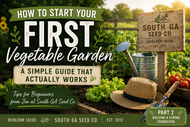
How to Start Your First Vegetable Garden: A Simple Guide That Actually Works : Part 2
Posted by Jennifer Dixon on 22nd Jul 2026
How to Start Your First Vegetable Garden: A Simple Guide That Actually Works
Part 2: Building a Strong Foundation for Success
By now, you've chosen a good location for your garden and hopefully you're feeling excited about getting started. Before you open that first seed packet, though, there's one more important step that deserves your attention.
The foundation of every successful garden starts beneath your feet.
Healthy soil is one of the greatest investments you can make, and the good news is you don't need perfect soil to grow great vegetables. Every gardener starts somewhere, and soil can almost always be improved over time.
Think of your soil as the pantry that feeds your plants. If it's healthy, rich, and full of life, your vegetables will reward you with stronger growth and better harvests. If it needs a little help, don't worry—that's something every gardener works on season after season.
Get to Know Your Soil
One of the first things I encourage new gardeners to do is simply spend a little time getting to know the soil they already have.
Grab a handful and squeeze it gently.
Does it crumble apart easily?
Does it feel sticky like clay after a rain?
Is it loose and sandy?
Every type of soil has its own strengths and challenges.
Clay soils tend to hold moisture well, but they can become compacted and make it harder for roots to spread. Sandy soils drain quickly, which helps prevent soggy roots, but they also dry out faster during the heat of summer. Many gardeners have soil that's somewhere in between, and that's often a great place to start.
No matter what kind of soil you have, don't let it discourage you. Some of the best gardens I've seen started with soil that needed plenty of improvement. Gardening is a journey, and your soil gets better every year when you care for it.
Feed the Soil Before You Feed the Plants
One lesson many experienced gardeners learn is that healthy plants begin with healthy soil.
Instead of thinking about fertilizers first, think about organic matter.
Adding compost each season is one of the simplest ways to improve almost any garden. Compost helps loosen heavy clay, gives sandy soil more structure, improves drainage, and encourages the beneficial organisms that help plants thrive.
If you have access to homemade compost, that's wonderful.
If not, bagged compost from a local garden center works well too.
Spread a few inches across your garden and gently work it into the top several inches of soil before planting. You don't have to overthink it. Even a modest amount added each season can make a noticeable difference over time.
Your garden doesn't need perfection—it just needs a healthy place for roots to grow.
Raised Beds or Traditional Gardens?
This is probably one of the most common questions beginners ask.
The honest answer?
Both can grow beautiful vegetables.
Raised beds have become incredibly popular over the last several years, and for good reason. They warm up a little faster in spring, often drain well after heavy rain, and they're easier to keep organized. Many gardeners also appreciate that raised beds reduce bending and make weeding a little easier.
On the other hand, a traditional in-ground garden has its own advantages.
It usually costs much less to start because you're planting directly into the soil you already have. Larger crops like sweet corn, pumpkins, watermelons, and winter squash often have plenty of room to spread, and many family gardens have been grown this way for generations.
If this is your very first garden, don't feel like you have to build elaborate raised beds before planting your first seeds.
Use what fits your space, your budget, and your goals.
Some of the happiest gardeners I know grow vegetables in simple rows behind the house, while others harvest incredible crops from a handful of raised beds. Success comes from caring for your plants—not from the style of garden you choose.
Give Your Plants Room to Grow
It's easy to underestimate how much space vegetables need.
Those tiny seedlings may look small today, but by midsummer they'll be reaching for sunlight, spreading their leaves, and competing for space.
One of the most common beginner mistakes is planting everything too close together.
I completely understand the temptation.
You look at an empty garden and think, "I have plenty of room."
A few weeks later the tomato plants are touching, cucumbers are climbing everywhere, and it's hard to walk between the rows.
Giving your vegetables proper spacing improves air circulation, makes harvesting easier, and helps reduce disease problems by allowing leaves to dry more quickly after rain or watering.
Always take a moment to read the spacing recommendations on your seed packets. Those guidelines aren't there to waste space—they're there because healthy plants need room to grow.
Planning Before You Plant
One of the simplest ways to avoid frustration is to sketch a quick garden plan before planting day.
You don't need anything fancy.
A sheet of notebook paper works just fine.
Draw the outline of your garden and decide where each vegetable will go.
Think about the mature height of your plants. Tall crops like corn or pole beans are usually best planted where they won't shade shorter vegetables for most of the day. Tomatoes often need cages or stakes, so leave yourself enough room to work around them later.
Planning ahead also helps you remember what you planted where—a surprisingly common problem once everything starts growing!
Easy Vegetables for Your First Garden
If you're just getting started, choose vegetables that are known for being dependable and rewarding.
Bush beans are one of my favorite recommendations. They germinate quickly, grow well in many climates, and often produce a generous harvest with very little fuss.
Lettuce is another great choice, especially during the cooler parts of the growing season. Watching those first leaves develop is incredibly satisfying, and fresh lettuce from the garden tastes wonderful.
Radishes are perfect if you're a little impatient. Many varieties mature in just a few weeks, making them one of the fastest vegetables to harvest.
Cucumbers are productive and fun to grow, especially if you give them a trellis to climb.
And of course, tomatoes remain one of the most popular vegetables—technically a fruit, but always at home in the vegetable garden. There's nothing quite like slicing into a sun-ripened tomato that you grew yourself.
You don't need to plant twenty different vegetables your first season.
Choose a handful that your family enjoys eating, learn what they need, and build your confidence from there.
From Jen's Garden
One thing I've learned over the years is that gardening has a funny way of rewarding patience.
You don't have to build the perfect garden in one weekend. Every season gives you another opportunity to improve your soil, try a new variety, or learn something you didn't know before.
Some of my favorite gardens aren't the biggest or the fanciest—they're simply the ones that are cared for consistently.
Start with a solid foundation, enjoy the process, and remember that every harvest begins with healthy soil and a single seed planted with hope.
To order seeds Click Here