
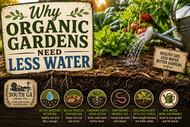
Why Organic Gardens Need Less Water
Posted by Jennifer Dixon on 3rd Jun 2026
Why Organic Gardens Need Less Water
Every gardener knows the feeling.
The summer sun is blazing, the soil is drying out, and it seems like you're constantly dragging hoses across the yard trying to keep everything alive.
Yet if you visit a well-established organic garden, you'll often notice something surprising.
The plants look healthier.
The soil stays moist longer.
And the gardener may be watering far less than expected.
This isn't magic.
It's one of the many benefits of building healthy soil.
At South GA Seed Co., we believe one of the greatest advantages of organic gardening is that it teaches us to work with nature instead of constantly fighting against it.
Healthy Soil Holds More Water
The secret begins beneath the surface.
Healthy soil rich in organic matter acts much like a sponge.
It absorbs rainfall and irrigation water, then slowly releases that moisture back to plant roots over time.
Organic matter helps improve:
-
Water retention
-
Soil structure
-
Root development
-
Microbial activity
As organic matter increases, the soil becomes better at storing water naturally.
This means less frequent watering and healthier plants during dry periods.
Compost Improves Moisture Retention
One reason experienced organic gardeners love compost is because it does much more than provide nutrients.
Compost helps soil:
-
Hold water longer
-
Improve drainage
-
Reduce runoff
-
Build long-term fertility
Whether added to raised beds, vegetable rows, or containers, compost helps create a growing environment that remains moist longer between waterings.
This becomes especially valuable during hot Southern summers.
Mulch Is Nature's Moisture Blanket
Walk through a forest and you'll rarely find bare soil.
Nature covers the ground with leaves, pine needles, and organic debris.
These natural layers help conserve moisture by protecting the soil from direct sunlight and wind.
Garden mulch works the same way.
Materials such as:
-
Straw
-
Leaves
-
Pine needles
-
Grass clippings
-
Compost
help reduce evaporation while keeping soil temperatures more stable.
Older Southern gardeners understood this well.
Many rarely left their soil exposed.
Strong Roots Reach Water More Effectively
Organic gardening focuses on building healthy soil, and healthy soil encourages stronger root systems.
Plants with deeper, more extensive roots can access moisture stored farther beneath the surface.
As soil structure improves, roots encounter less compaction and can grow more freely.
The result is often:
-
Better drought tolerance
-
Reduced plant stress
-
More resilient harvests
Strong roots make better use of every drop of water.
Earthworms Help Water Reach the Roots
One of the hidden benefits of earthworms is the network of tunnels they create throughout the soil.
These tunnels allow water to:
-
Penetrate deeper
-
Reduce runoff
-
Reach plant roots more efficiently
Earthworms also improve soil structure and help organic matter break down into nutrients plants can use.
A garden filled with earthworms is often a garden that manages water well.
Organic Soil Improves Year After Year
Unlike many quick-fix gardening solutions, organic practices continue to build benefits over time.
Each season that gardeners add:
-
Compost
-
Mulch
-
Leaves
-
Organic matter
the soil becomes richer and more capable of holding moisture.
Many experienced gardeners find that mature organic gardens require less watering than newly established beds.
The improvements compound season after season.
Nature Already Knows the Answer
Forests thrive without irrigation systems.
Wild meadows survive long dry spells.
Natural ecosystems have spent thousands of years developing ways to conserve moisture.
Organic gardening works because it borrows from those same principles.
Rather than constantly replacing lost water, organic gardeners focus on creating soil that holds water more effectively in the first place.
Less Water, Healthier Gardens
Organic gardening isn't just about avoiding synthetic products.
It's about building a healthier, more resilient growing environment.
When soil contains abundant organic matter, beneficial microbes, earthworms, and healthy root systems, it becomes better equipped to handle heat and drought.
The result is often:
-
Less watering
-
Healthier plants
-
Better harvests
-
More sustainable gardening
At South GA Seed Co., we believe the healthiest gardens begin with healthy soil. And one of the greatest rewards of building that soil is discovering that nature often provides exactly what our plants need.
To order seeds Click Here