
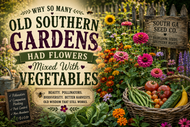
Why So Many Old Southern Gardens Had Flowers Mixed With Vegetables
Posted by Jennifer Dixon on 24th May 2026
Why So Many Old Southern Gardens Had Flowers Mixed With Vegetables
There was a time when Southern gardens were never planted in perfectly straight rows of vegetables alone.
Tomatoes climbed beside marigolds. Zinnias bloomed near beans and squash. Herbs spilled from pathways while bees drifted lazily between flowers and vegetables beneath the summer sun.
To many modern gardeners, these old gardens may have looked wild or unorganized.
But there was wisdom growing there.
For generations, Southern gardeners understood something modern gardening often forgot: a healthy garden was meant to be alive.
At South GA Seed Co., we believe some of the most beautiful gardens are also the most balanced.
Flowers Were Never “Just Decorative”
In older Southern gardens, flowers often served practical purposes alongside their beauty.
Gardeners planted flowers to:
-
attract pollinators
-
support beneficial insects
-
deter certain pests
-
improve biodiversity
-
provide herbal remedies
-
brighten the homestead
Many families viewed flowers and vegetables as natural companions rather than separate spaces.
The result was a garden filled with color, movement, fragrance, and life.
Pollinators Were Welcomed Guests
Long before people used the word “pollinator garden,” Southern gardeners understood the importance of bees, butterflies, and other beneficial insects.
Flowers such as:
-
zinnias
-
sunflowers
-
yarrow
-
chamomile
-
lavender
-
four o’clocks
helped attract pollinators that improved vegetable production throughout the garden.
A thriving pollinator population often meant:
-
healthier squash
-
fuller cucumber harvests
-
better bean production
-
increased biodiversity
Old gardens worked with nature instead of trying to separate from it.
Companion Planting Was Practical Wisdom
Many traditional gardeners practiced companion planting long before it became popular online.
Certain flowers were commonly grown near vegetables because gardeners observed natural benefits over generations.
Examples included:
-
marigolds near tomatoes
-
herbs near cabbage
-
flowers around squash
-
pollinator borders beside beans and peas
These combinations often helped:
-
attract beneficial insects
-
confuse pests
-
maximize space
-
create healthier ecosystems
Whether every old gardening belief was scientifically perfect mattered less than the overall balance these gardens created.
Southern Gardens Reflected the Personality of the Home
Older gardens were deeply personal spaces.
No two looked exactly alike.
Gardeners mixed:
-
vegetables
-
medicinal herbs
-
flowers
-
fruit trees
-
native plants
-
heirloom seeds
into living landscapes that reflected both beauty and usefulness.
Children chased butterflies through rows of beans while herbs dried on porches nearby. Seeds were saved in mason jars, and flowers were often planted simply because they brought joy to hard-working families.
Gardens nourished more than just the table.
Biodiversity Created Resilience
One reason many older gardens remained surprisingly resilient was diversity.
Modern monoculture systems often place large amounts of the same plant together, making it easier for pests and diseases to spread rapidly.
Traditional mixed gardens naturally created:
-
healthier insect populations
-
improved pollination
-
stronger soil biology
-
reduced pest pressure
-
ecological balance
The mixture of flowers, herbs, and vegetables helped create gardens that felt vibrant and alive rather than sterile.
Nature thrives through diversity.
Beauty and Food Once Belonged Together
Today, gardens are often divided into categories:
-
ornamental gardens
-
vegetable gardens
-
flower beds
-
herb gardens
But older Southern homesteads rarely separated beauty from practicality so strictly.
Flowers belonged beside vegetables because both served the home in different ways.
A garden could feed the body while also feeding the spirit.
That old philosophy still resonates deeply with many gardeners today.
Bringing Life Back Into the Garden
As more people rediscover heirloom gardening and traditional growing methods, many are returning to these older ideas once again.
Mixing flowers among vegetables:
-
supports pollinators
-
increases biodiversity
-
improves garden beauty
-
creates healthier ecosystems
-
reconnects us to older gardening traditions
Sometimes the most productive gardens are also the most beautiful.
At South GA Seed Co., we believe gardens should feel alive — filled with food, flowers, pollinators, fragrance, and the quiet wisdom of generations past.
Because the old Southern gardens were never simply planted.
They were lived in.
To order seeds Click Here