
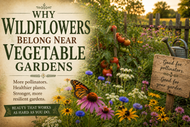
Why Wildflowers Belong Near Vegetable Gardens
Posted by Jennifer Dixon on 28th May 2026
Why Wildflowers Belong Near Vegetable Gardens
There was a time when vegetable gardens rarely stood alone.
Wildflowers drifted along fence lines. Bees floated lazily between squash blossoms and blooming herbs. Butterflies moved through tomatoes and sunflowers while birds gathered nearby in the evening light.
Older Southern gardens often blended food, flowers, herbs, and native plants together into spaces that felt vibrant and alive.
To many modern gardeners, wildflowers may seem decorative.
But for generations, they were part of the natural balance that helped gardens thrive.
At South GA Seed Co., we believe the healthiest gardens are often the ones that welcome a little wildness.
Wildflowers Invite Pollinators Into the Garden
One of the greatest benefits of wildflowers is the life they attract.
Bees, butterflies, moths, and other pollinators are essential for many garden crops, including:
-
squash
-
cucumbers
-
melons
-
beans
-
peppers
-
tomatoes
Wildflowers help provide:
-
nectar
-
pollen
-
shelter
-
habitat
-
seasonal food sources
When pollinators remain active around the garden, vegetable production often improves naturally.
Older Southern gardeners understood that flowers were not separate from the garden ecosystem.
They were part of it.
Biodiversity Creates More Resilient Gardens
Gardens filled with only one type of plant can become vulnerable to:
-
pests
-
disease
-
nutrient imbalance
-
ecological stress
Wildflowers help increase biodiversity by attracting:
-
beneficial insects
-
pollinators
-
predatory insects
-
birds
-
soil-supporting organisms
This diversity creates healthier natural balance throughout the garden.
Nature rarely thrives in monocultures.
The old Southern gardens often succeeded because they embraced variety instead of fighting it.
Beneficial Insects Need Shelter Too
Not every insect in the garden is harmful.
Many beneficial insects help control pests naturally.
Wildflowers provide habitat for:
-
ladybugs
-
lacewings
-
parasitic wasps
-
hoverflies
-
native pollinators
These insects can help reduce populations of:
-
aphids
-
caterpillars
-
harmful garden pests
Older gardeners often relied more on natural balance than heavy chemical spraying.
Wildflowers quietly supported that balance.
Wildflowers Bring Beauty Into Working Gardens
Traditional gardens were rarely designed for efficiency alone.
Flowers softened pathways, brightened fences, and filled vegetable gardens with movement and color throughout the growing season.
Wildflowers help create spaces that feel:
-
peaceful
-
welcoming
-
alive
-
layered
-
deeply connected to nature
A thriving garden nourishes more than the harvest.
It nourishes the spirit as well.
Native Wildflowers Often Thrive With Less Effort
Many native wildflowers are naturally adapted to local conditions.
They often tolerate:
-
heat
-
drought
-
poor soil
-
changing weather
-
Southern humidity
This resilience makes them excellent companions for vegetable gardens, especially in warmer climates.
Once established, many wildflowers reseed themselves naturally year after year.
Older Southern landscapes often worked with these natural cycles rather than trying to control every inch of the garden.
Wildflowers Help Gardens Feel Alive
One reason old gardens felt so memorable was because they contained layers of life.
Wildflowers brought:
-
bees humming in the afternoon
-
butterflies drifting between rows
-
birds feeding at dusk
-
soft movement in the summer breeze
The garden became more than rows of vegetables.
It became an ecosystem.
And perhaps that is why many people still remember those gardens so vividly decades later.
Bringing Wildness Back Into Modern Gardens
Today, more gardeners are rediscovering the value of blending flowers with food crops once again.
Wildflowers:
-
support pollinators
-
improve biodiversity
-
attract beneficial insects
-
soften garden spaces
-
create beauty and resilience together
Sometimes the healthiest gardens are not the most controlled.
Sometimes they are the ones willing to leave room for nature itself.
At South GA Seed Co., we believe a garden should feel alive from the moment you step inside it.
And often, the wildflowers are where that feeling begins.
To order seeds Click Here
Related Gardening Guides
- Why Old Gardens Smelled Different
- The Forgotten Vegetables Making a Comeback in Southern Gardens
- Broadleaf Plantain: The Healing Herb Once Called “White Man’s Footprint”
- Best Tomatoes for Humid Southern Summers | Heirloom Varieties for Georgia Gardens
- When to Plant a Fall Garden in Georgia: Complete Guide
- What to Plant in August in Georgia: A Southern Gardener’s Guide