
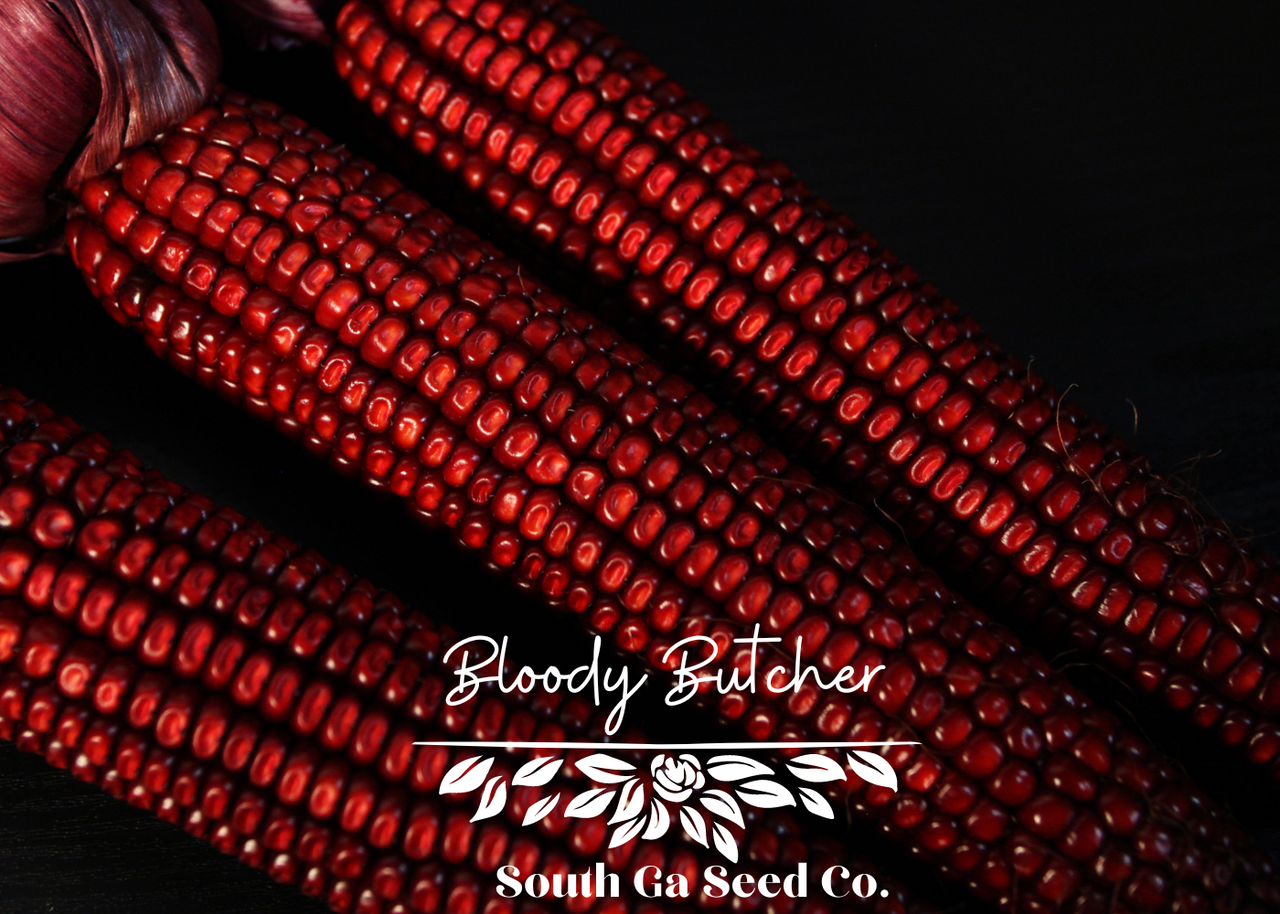

Bloody Butcher corn is a striking heirloom dent corn variety celebrated for its deep crimson-red kernels, rich history, and exceptional versatility in the kitchen. Dating back to the early 1800s, this heritage variety has long been treasured for making flavorful cornmeal, grits, hominy, and livestock feed while also serving as a beautiful ornamental addition to gardens and fall displays.
The name “Bloody Butcher” comes from the dramatic dark red coloration of the kernels, which range from ruby red to deep burgundy when mature. These colorful ears create an eye-catching display both in the garden and after harvest, making this variety a favorite among heirloom corn enthusiasts and seed savers.
Beyond its beautiful appearance, Bloody Butcher corn is highly valued for its rich nutty flavor and hearty texture. It grinds into flavorful cornmeal perfect for cornbread, tortillas, grits, polenta, and traditional Southern dishes. The vibrant kernels can also be used decoratively in dried arrangements, autumn displays, and rustic crafts.
This resilient variety performs well in a wide range of climates and soil conditions, making it an excellent choice for both home gardeners and small-scale growers. Tall vigorous stalks produce dependable harvests while adding dramatic visual appeal to summer gardens.
Whether grown for fresh-ground cornmeal, ornamental beauty, seed saving, or historical preservation, Bloody Butcher corn offers gardeners a rewarding and deeply traditional growing experience.
Bloody Butcher Corn Seed Details
- Quantity: 25 Seeds
- Seed Planting Depth: 1–2"
- Germination Temperature: 70–80°F
- Days to Germination: 4–8 Days
- Row Spacing: 12–24"
- Plant Spacing: 6–8"
- 100' Row Yield: 15 lb
- Sun Requirements: Full Sun
- Harvest Time: Approximately 95 Days
- Growth Habit: Tall Dent Corn
- Ideal Uses: Cornmeal, Grits, Polenta, Hominy, Heirloom Gardens, Decorative Displays, Fall Décor, Livestock Feed, Seed Saving, Historic Gardens
How to Save Bloody Butcher Corn Seeds
Corn readily cross-pollinates with other corn varieties, so isolation is extremely important when saving pure seed. Separate different corn varieties by at least 1 mile whenever possible to prevent unwanted crossing.
Allow the ears to fully mature and dry naturally on the stalk before harvesting. However, do not leave mature ears exposed too long once dry, especially in wet weather, as moisture and pests may damage seed quality.
For healthy genetic diversity, collect seed from at least 100 separate corn plants whenever possible. Once harvested, continue curing the ears in a dry well-ventilated location until the kernels are completely hard and dry.
After fully curing, rub or shell the kernels from the cobs and store the seeds in a cool dry location inside labeled airtight containers for future planting seasons.


