
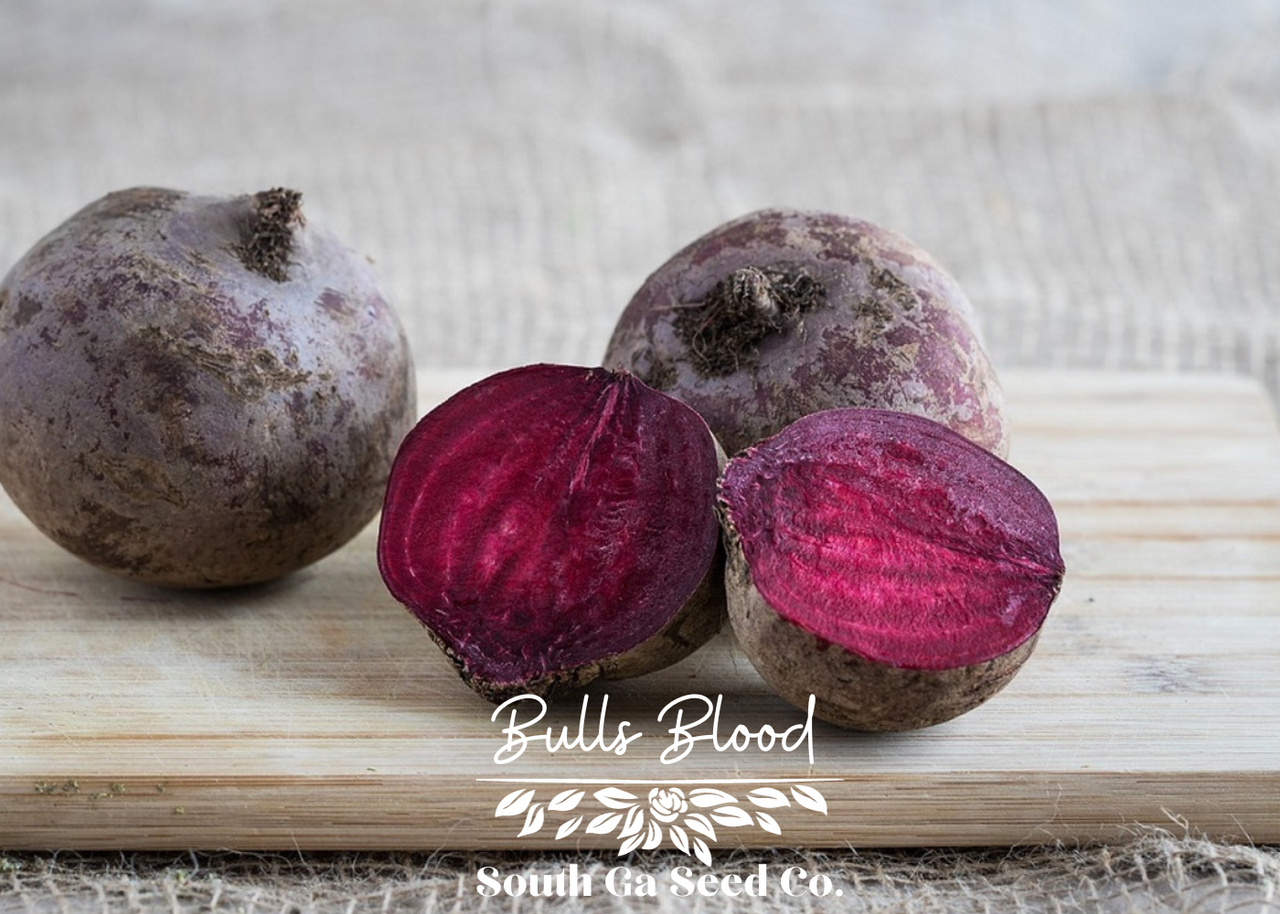

Bull's Blood Beet is a striking heirloom variety prized for its deep burgundy foliage, sweet roots, and exceptional dual-purpose value. A member of the Amaranthaceae family, this distinctive beet variety is grown both for its flavorful roots and its highly ornamental leaves. The vibrant red-purple foliage adds dramatic color to garden beds while providing nutritious greens throughout the growing season.
The tender young leaves are excellent for salads, fresh greens, and garnishes, offering a mild earthy flavor and rich coloration. As the plants mature, they develop sweet, tender roots that are ideal for roasting, boiling, steaming, pickling, and juicing. Both the roots and greens are rich in vitamins, minerals, and antioxidants, making Bull's Blood Beet a highly nutritious addition to the garden and kitchen.
This cool-season crop thrives in fertile, well-drained soil with a pH between 6.0 and 7.5 and performs best in full sun. Direct sow seeds into the garden and maintain consistent moisture throughout the growing season to encourage uniform root development and tender foliage. Proper thinning allows roots to reach their full size while promoting healthy plant growth.
Beautiful, productive, and easy to grow, Bull's Blood Beet remains one of the most versatile heirloom beet varieties for gardeners seeking ornamental appeal, nutritious greens, and flavorful roots from a single planting.
Bull's Blood Beet Seed Details
- Quantity: 100 Seeds
- Plant Type: Heirloom Beet
- Family: Amaranthaceae
- Scientific Name: Beta vulgaris
- Root Appearance: Deep Red Roots with Dark Burgundy Foliage
- Flavor: Sweet and Earthy
- Best Uses: Salads, Roasting, Boiling, Pickling, Juicing, Fresh Greens
- Seed Planting Depth: 1/2 Inch
- Germination Temperature: 55-65°F
- Days to Germination: 5-7 Days
- Row Spacing: 4 Inches
- Plant Spacing: 3 Inches
- 100' Row Yield: 45 Pounds
- Sun Requirements: Full Sun
- Harvest Time: Approximately 56 Days
- Special Features: Ornamental Foliage, Dual-Purpose Crop, Sweet Roots, Nutrient Dense
How to Save Seeds
Beets readily cross-pollinate with other beet varieties as well as Swiss chard, since both belong to the species Beta vulgaris. To maintain varietal purity, isolate flowering plants by at least three-quarters of a mile whenever possible.
Because beets are biennial plants, they must overwinter before producing seed. In colder climates, many gardeners harvest the roots, trim the foliage to approximately 2 inches above the crown, and store them in damp sand or sawdust in a cool root cellar throughout winter.
In milder climates, plants may survive outdoors when protected with a thick layer of mulch. When spring arrives, replant stored roots if necessary and allow the plants to produce tall flowering stalks and seed clusters.
Allow the seed stalks to mature and dry completely before harvesting. Once collected, separate the seeds from the dried plant material and store them in a cool, dry location for future planting.