

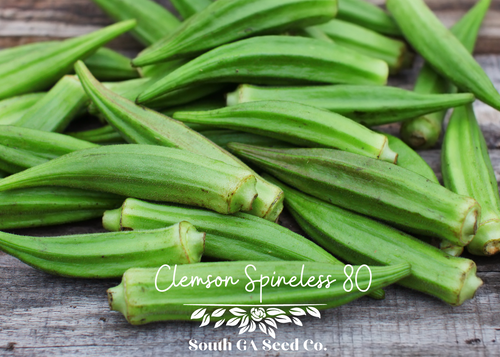
Clemson Spineless 80 Okra is a classic heirloom variety prized for its smooth spineless pods, vigorous growth, and exceptional productivity. A member of the Malvaceae family, this well-known cultivar was developed by Clemson University and has remained a favorite among home gardeners and market growers for generations. Its dependable yields and easy harvest make it one of the most widely grown okra varieties available.
The tender green pods are harvested when young and offer a mild flavor and excellent texture for a wide variety of culinary uses. Clemson Spineless 80 Okra is ideal for frying, grilling, boiling, pickling, and adding to soups, stews, and traditional gumbo where its natural thickening properties are highly valued. Rich in vitamins A and C, calcium, and fiber, okra is both nutritious and versatile in the kitchen.
This warm-season crop thrives in full sun and well-drained soil with a pH between 6.5 and 7.5. Okra is highly sensitive to cold and should be planted only after all danger of frost has passed and soil temperatures have warmed. Plants grow vigorously in hot weather, often reaching heights of 4 to 5 feet while producing a steady supply of pods throughout the growing season.
Productive, heat tolerant, and easy to grow, Clemson Spineless 80 Okra remains one of the finest heirloom okra varieties for gardeners seeking dependable harvests, smooth spineless pods, and outstanding culinary versatility.
Clemson Spineless 80 Okra Seed Details
- Quantity: 70 Seeds
- Plant Type: Heirloom Okra
- Family: Malvaceae
- Pod Appearance: Smooth Green Spineless Pods
- Flavor: Mild and Tender
- Best Uses: Frying, Grilling, Boiling, Pickling, Gumbo, Soups, Stews
- Seed Planting Depth: 1/4 Inch
- Germination Temperature: 70-80°F
- Days to Germination: 10-15 Days
- Row Spacing: 36 Inches
- Plant Spacing: 12 Inches
- 100' Row Yield: 50-100 Pounds
- Sun Requirements: Full Sun
- Harvest Time: Approximately 58 Days
- Special Features: Spineless Pods, Heat Tolerant, Heavy Producer, Easy Harvesting
How to Save Seeds
Okra is usually self-pollinating, but cross-pollination can occur when different varieties are grown nearby. To maintain varietal purity, separate different okra varieties by up to one mile whenever possible and save seed from healthy, vigorous plants.
Select several healthy plants and allow the pods chosen for seed saving to remain on the stalk well beyond the edible stage. The pods will gradually become large, woody, and completely dry.
Once the pods have fully matured and dried on the plant, harvest them and allow them to continue drying indoors if necessary. Mature seed pods will be brittle and easily split open.
Crack open the dried pods and remove the seeds. Allow the seeds to dry completely before storing them in a cool, dry location for future planting.