

★ Organically grown on our farm
North GA Candy Roaster Squash is a beautiful and rare heirloom variety native to the mountains of North Georgia. This treasured Appalachian squash is prized for its rich sweet flavor, large meaty orange flesh, and excellent storage capabilities, making it a favorite among homesteaders and heirloom gardeners.
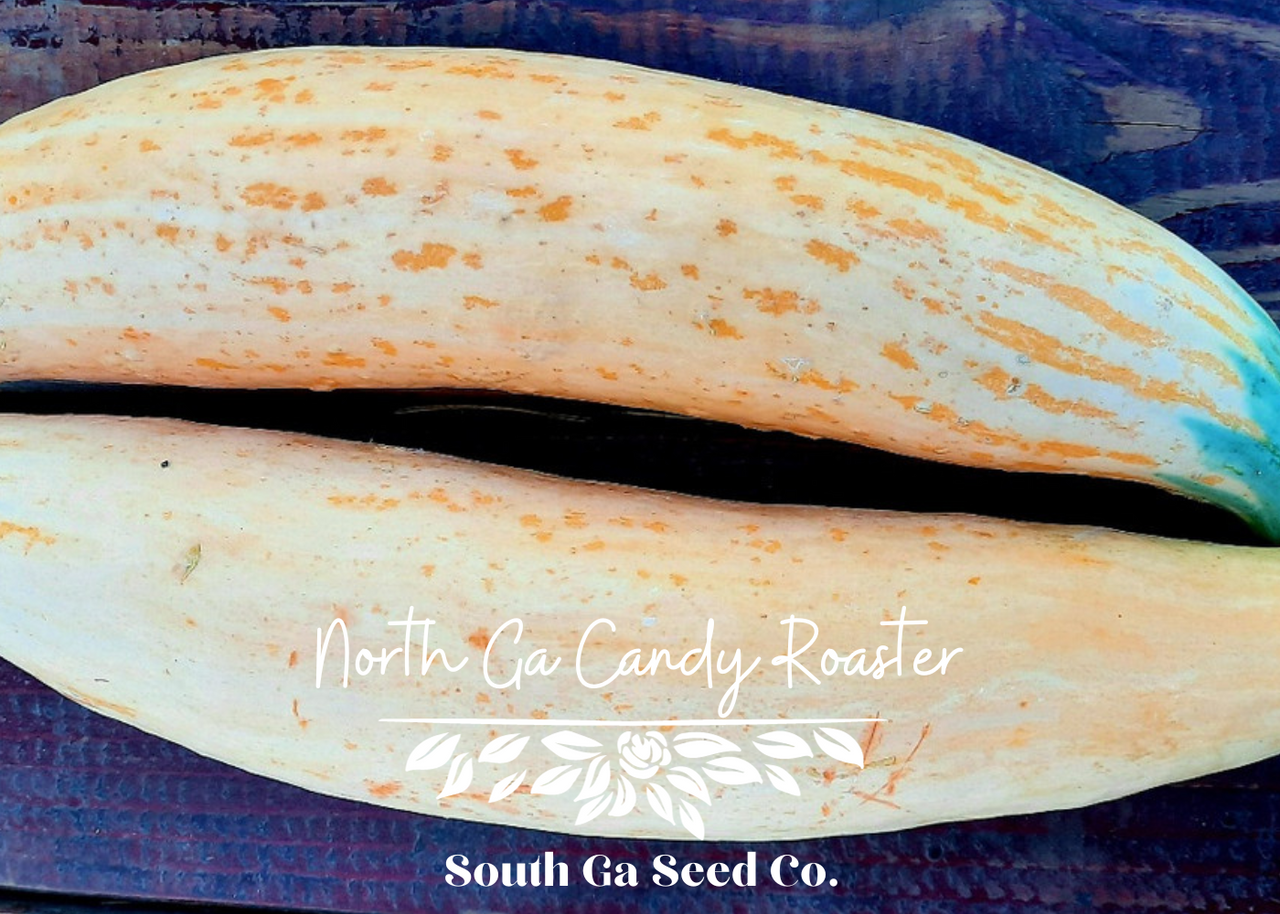
The long slightly curved fruits feature a distinctive salmon-colored body with green tips and develop a delicious flavor similar to butternut squash with an added hint of sweetness. The dense orange flesh is excellent for roasting, baking, soups, casseroles, pies, and long-term food storage.
North GA Candy Roaster produces vigorous sprawling vines and dependable heavy yields. This heirloom Cucurbita maxima variety performs exceptionally well in large garden spaces, homesteads, and traditional Southern gardens.
North GA Candy Roaster Squash Seed Details
- Quantity: 12 Seeds
- Plant Type: Heirloom Winter Squash
- Species: Cucurbita maxima
- Fruit Color: Salmon with Green Tips
- Flesh Color: Deep Orange
- Flavor: Sweet Rich Butternut-Like Flavor
- Growth Habit: Vigorous Sprawling Vines
- Seed Planting Depth: 1 to 1.5 Inches
- Germination Temperature: 70-85°F
- Days to Germination: 3-10 Days
- 100' Row Yield: 100 Pounds
- Row Spacing: 48 Inches
- Plant Spacing: 24-36 Inches
- Sun Requirements: Full Sun
- Ideal Uses: Roasting, Baking, Soups, Pies, Casseroles, Food Storage, Homesteads, Appalachian Gardens
How to Save Seeds
Pumpkins and squash belong to the same plant family and can cross pollinate with other varieties within the same species. The four commonly grown squash species are Cucurbita pepo, Cucurbita maxima, Cucurbita moschata, and Cucurbita mixta.
Any varieties sharing the same species name can cross pollinate and should be separated by at least 500 feet for maintaining seed purity. Since North GA Candy Roaster is a Cucurbita maxima variety, avoid growing it near other C. maxima squash if saving pure seed.
Allow fruits to remain on the vine until fully mature in fall before harvesting for seed saving. After cutting from the vine, let the squash cure for about one week in a dry protected location.
Cut open the cured squash and scoop out the seeds and pulp into water. Rinse the seeds thoroughly and spread them onto paper towels or mesh screens to dry completely.
Turn the seeds occasionally during drying to ensure proper airflow and even drying. Once fully dry, store the seeds in labeled airtight containers or envelopes in a cool dry location for future planting.


