
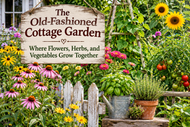
How to Grow an Old-Fashioned Cottage Garden
Posted by Jennifer Dixon on 15th Nov 2026
Have you ever walked past an old garden and noticed how everything seems to grow together? Flowers spilling over the edges of the beds, herbs tucked here and there, tomatoes ripening on the vine, and maybe a few sunflowers standing taller than everything else.
There is something awfully charming about a garden like that.
Years ago, gardens weren't always divided into neat little sections with flowers here, vegetables there, and herbs somewhere else. Folks planted what they needed, added a few flowers because they enjoyed them, and made the most of whatever space they had.
The result was often a garden that was both useful and beautiful.
That's the idea behind an old-fashioned cottage garden. It doesn't have to be perfectly arranged, and it certainly doesn't have to look like something out of a magazine. It's a place where flowers, herbs, and vegetables can share the same space, each bringing something useful to the garden.
And truthfully, I think we've gotten a little too caught up in keeping everything separate.
Let's bring a little of that old-fashioned gardening spirit back.
────────────────────────────────────────
So, What Is a Cottage Garden Anyway?
The traditional cottage garden has roots in the practical household gardens of England. These gardens were originally planted to provide food, herbs, fruit, and useful plants close to home. Flowers found their way in, too, and over time the gardens became known for their relaxed, overflowing appearance.
There wasn't much fuss about making everything match. A gardener might plant beans along a fence, tuck herbs near the kitchen door, and fill an empty corner with whatever flowers were handy.
That's part of the charm.
A cottage garden isn't about following a strict set of rules. It's about making a garden that works for you while leaving a little room for beauty along the way.
You might have:
-
Hollyhocks growing along an old fence
-
Zinnias and calendula tucked between vegetable beds
-
Basil growing near the tomatoes
-
Pole beans climbing a trellis
-
Coneflowers and daisies attracting butterflies
-
A little patch of herbs close to the back door
It doesn't have to be fancy. In fact, the less fussy it is, the better I like it.
Why Flowers Belong in the Vegetable Garden
I have always thought flowers and vegetables made good neighbors.
Flowers bring color and life to a garden, but they can do more than just look pretty. Many provide nectar and pollen for bees, butterflies, hoverflies, and other beneficial insects. Some of those insects help pollinate our crops, while others help keep pest populations in check.
A few flowers scattered throughout the vegetable garden can make a real difference in the variety of insects visiting your plants.
Here are a few old favorites worth making room for.
Zinnias
You can't go too far wrong with zinnias. They are cheerful, easy to grow, and come in all sorts of colors. Butterflies seem to enjoy them, and they make wonderful flowers to cut and bring indoors.
Calendula
Calendula is one of those old-fashioned flowers that deserves more attention. Its bright yellow and orange blooms look right at home in a cottage garden, and it attracts visiting beneficial insects.
Cosmos
Cosmos has a light, airy look that works beautifully in an informal garden. It grows readily from seed and produces plenty of flowers without demanding much attention.
Sunflowers
A few sunflowers can change the whole look of a garden. They add height, attract pollinators, and later provide seed heads that birds enjoy.
Coneflowers
Coneflowers are wonderful perennial flowers that return year after year once established. Their blooms provide nectar for visiting pollinators and add a lovely old-fashioned touch.
You don't need a whole flower bed to enjoy them. A few here and there will do just fine.
Don't Forget the Herbs!
If you ask me, no cottage garden is complete without a good collection of herbs.
Our grandparents understood the usefulness of keeping herbs close to the house. They were handy for cooking, pleasant to have around, and many had a place in traditional household gardens.
You don't need a large herb garden, either. A sunny corner, a few containers, or a little space along a pathway can be enough to get started.
Here are some I would consider planting:
Basil – Especially nice near the kitchen garden, and a natural companion to summer tomatoes in the kitchen.
Parsley – A dependable culinary herb that can be harvested as needed.
Chives – Easy to grow, useful in the kitchen, and pretty when their purple flowers appear.
Thyme – A low-growing herb that works nicely along garden edges and in containers.
Dill – Its delicate foliage and pretty yellow flower heads make it a welcome addition. Dill flowers also attract beneficial insects.
Lemon Balm – A fragrant herb that makes a pleasant addition to a tea garden. Just give it room because it can spread.
One thing I like about herbs is that they don't need to be tucked away in a separate bed. Let them grow where they are convenient and where they'll get the sunlight they need.
Vegetables Can Be Pretty, Too!
Sometimes I think we forget just how attractive a vegetable garden can be.
Have you ever really looked at a squash plant? Those big leaves are something to behold. And a row of heirloom tomatoes, with all their different shapes and colors, can be every bit as interesting as a flower bed.
Vegetables don't have to be hidden away in straight rows to be useful.
Try working a few of these into your cottage garden:
Heirloom Tomatoes
Tomatoes bring plenty of variety to the garden. From small currant tomatoes to large, colorful slicing varieties, there is no shortage of interesting shapes and colors to grow.
Pole Beans
Pole beans are wonderful when you need to grow upward instead of outward. Give them a sturdy trellis or fence and let them climb. Their flowers and foliage add interest while producing a useful harvest.
Peppers
Pepper plants are attractive little plants in their own right. Their green foliage and colorful fruits fit nicely into a mixed garden.
Leaf Lettuce
Lettuce can be surprisingly pretty, especially when you mix red and green varieties. It also makes good use of cooler spots and can be tucked into spaces that might otherwise sit empty.
Squash
Squash plants have large leaves and a sprawling habit. They need room, so give them a place where they won't crowd out everything else. Some gardeners even train suitable varieties to grow vertically.
The idea is simple: grow things you enjoy eating, and don't be afraid to let them share space with your flowers.
A Little Planning Will Save You a Heap of Trouble
Now, just because a cottage garden looks a little wild doesn't mean we want it getting completely out of hand!
A little planning before planting will make things much easier once everything starts growing.
1. Pay Attention to Sunlight
Most vegetables and many flowering annuals need at least six hours of direct sunlight each day. Put taller plants where they won't shade smaller ones that need plenty of sunshine.
2. Group Plants With Similar Needs
Some plants like consistently moist soil, while others prefer things a little drier. Grouping plants with similar watering needs will save you time and frustration.
3. Leave Yourself a Walking Path
This is one I wouldn't skip. A garden may look lovely when it's full, but you'll be mighty glad you left room to get in there and work. Leave paths or stepping stones so you can reach your plants without trampling everything.
4. Grow Up When You Can
Trellises, fences, and simple supports can make a big difference in a small garden. Pole beans and suitable flowering vines can use vertical space instead of taking over the ground.
5. Choose Flowers That Bloom at Different Times
Try planting a mixture of annuals and perennials so something is blooming throughout more of the growing season. This gives visiting pollinators more opportunities to find food and keeps the garden looking lively.
6. Take Care of Your Soil
Good soil is the foundation of a productive garden. Add suitable organic matter, maintain good drainage, and avoid working the soil when it's soaking wet. Healthy soil makes a world of difference.
────────────────────────────────────────
There's Something Special About Saving Seeds
One of my favorite things about old-fashioned gardening is the tradition of saving seeds.
For generations, gardeners saved seeds from their favorite tomatoes, beans, peas, flowers, and other crops. Sometimes those seeds were passed down through the family. Other times they were shared with a neighbor or traded with another gardener.
A favorite variety might be planted year after year, becoming a familiar part of the family garden.
Open-pollinated varieties make this tradition possible when grown and saved properly. Some crops are easier to save than others, though. Tomatoes, beans, and peas are generally good choices for beginning seed savers, while crops such as squash and corn require more attention to pollination and isolation.
Saving seeds is about more than having something to plant next spring. It's a way to keep useful varieties growing and pass a little gardening history along to someone else.
That's something we care deeply about here at South GA Seed Co.
Through our Seed to Sower Restoration Project, we've worked to find, grow, and preserve rare heirloom varieties that deserve another chance in the garden. Some of these varieties are difficult to find, and preserving them helps keep their stories alive.
A seed may be small, but it can carry quite a bit of history.
You Don't Need an English Cottage to Grow One!
Here's the good news: you don't need a cottage, a big piece of land, or a perfectly landscaped yard to enjoy this kind of gardening.
A small backyard will do. So will a few raised beds, a sunny side yard, or even a collection of containers near the porch.
Start with a vegetable you enjoy eating, an herb you use in the kitchen, and a flower that makes you smile.
That's enough to get you going.
As you gain experience, add a few more plants. Try something new each season. Let a few flowers go to seed, save what you can, and see what grows well in your own little corner of the world.
Before long, you'll have a garden that is useful, welcoming, and full of personality.
────────────────────────────────────────
A Garden Doesn't Have to Be Perfect to Be Wonderful
I think one of the nicest things about an old-fashioned garden is that it doesn't ask us to make everything perfect.
A sunflower can lean a little. The herbs can spill over their pots. The tomatoes may need another stake, and the zinnias might be growing in places we never planned for them.
That's all right.
A garden is a living thing, and sometimes the best ones are the ones that surprise us.
There's room for vegetables, flowers, herbs, and even a few plants that simply make us happy. We don't have to choose between a pretty garden and a productive one.
At South GA Seed Co., we believe there's still a place for that kind of gardening. We offer heirloom vegetable seeds, flowers, and herbs for folks who appreciate growing useful plants, saving seeds, and keeping a little gardening tradition alive.
You don't have to recreate your grandmother's garden exactly. Just borrow a few of her ideas and make them your own.
And who knows? Maybe someday someone will save a handful of seeds from your garden and plant them in theirs.
Now, wouldn't that be something?
Happy Gardening!
Jennifer Dixon
South GA Seed Co.
To order seeds Click Here
────────────────────────────────────────