
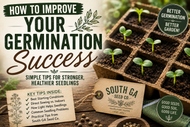
How to Improve Seed Germination: Simple Tips for Stronger, Healthier Seedlings Part 2
Posted by Jennifer Dixon on 6th Aug 2026
How to Improve Your Germination Success
By now, you've probably realized that successful germination isn't about luck.
It's about creating the right environment.
The good news is that you don't need expensive equipment or years of experience to improve your success rate. Small changes in how you plant and care for your seeds can make a remarkable difference.
Let's look at a few simple ways to give your seeds the best possible start.
Creating the Right Seed Starting Environment
Every seed has the same basic requirements before it will begin growing.
It needs:
• Consistent moisture
• The proper soil temperature
• Good air circulation
• Quality soil
• Enough oxygen
• A little patience
If one of these ingredients is missing, germination may slow down or stop altogether.
Think of a seed as a sleeping plant.
Your job isn't to force it to grow.
Your job is simply to provide the conditions that tell it it's safe to wake up.
One of the biggest mistakes new gardeners make is constantly digging up seeds to check on them.
As tempting as it may be, resist the urge.
Every time the soil is disturbed, the tiny root that is just beginning to develop can be damaged.
Instead, trust the process.
Keep the soil evenly moist, monitor the weather, and allow nature to do what it has been doing for millions of years.
Direct Sowing vs. Starting Seeds Indoors
One question we hear quite often at South GA Seed Co. is:
"Should I plant my seeds directly in the garden, or should I start them indoors first?"
The answer depends on the crop.
Many vegetables actually prefer to be planted directly into the garden.
These include:
• Beans
• Peas
• Corn
• Carrots
• Radishes
• Beets
• Squash
• Cucumbers
These crops generally dislike having their roots disturbed and usually perform best when planted where they'll finish growing.
Other vegetables benefit from getting an early start indoors.
Examples include:
• Tomatoes
• Peppers
• Eggplant
• Broccoli
• Cabbage
• Cauliflower
Starting these crops indoors allows you to get a head start on the growing season while outdoor temperatures are still too cool for planting.
Both methods work well.
The key is understanding what each crop prefers.
Choosing the Right Seed Starting Mix
One simple way to improve germination is by using a quality seed-starting mix.
Many beginners assume that any soil will work.
While garden soil is excellent for growing established plants, it often isn't the best choice for starting seeds indoors.
Seed-starting mixes are lighter and designed to hold moisture while still allowing plenty of air around developing roots.
This creates an ideal environment for germination.
If you're sowing directly into the garden, preparing loose, healthy soil before planting is one of the best things you can do.
Adding compost each season improves soil structure, encourages beneficial organisms, and creates a healthier home for young roots.
How Light Affects Young Seedlings
One of the biggest surprises for new gardeners is learning that seeds don't need light to germinate.
Most seeds simply need moisture, warmth, and oxygen.
However, once those first green leaves appear, everything changes.
Young seedlings need plenty of light to grow into sturdy, healthy plants.
Without enough light, seedlings often become tall, thin, and weak as they stretch toward the nearest light source.
Gardeners call this becoming "leggy."
If you're starting seeds indoors, place seedlings in a bright location or under grow lights soon after they emerge.
Healthy light leads to healthy plants.
Hardening Off Young Seedlings
If you've started your vegetables indoors, don't rush them straight into the garden.
Indoor seedlings have been protected from wind, intense sunlight, and changing temperatures.
Suddenly placing them outside can shock young plants.
Instead, gradually introduce them to outdoor conditions over the course of a week.
Place them outside for a few hours each day, slowly increasing their exposure to sunlight and wind.
This process, known as hardening off, helps seedlings adjust before they're transplanted into the garden.
A little patience during this step often results in stronger, healthier plants throughout the growing season.
Common Problems After Germination
Even after seeds successfully sprout, young seedlings still need a little extra attention.
A few common problems include:
**Leggy Seedlings**
Usually caused by insufficient light.
**Yellow Seedlings**
Often the result of too much water, poor drainage, or nutrient deficiencies.
**Seedlings Falling Over**
This may be caused by damping-off disease, a fungal problem encouraged by overly wet conditions and poor airflow.
**Slow Growth**
Can result from cool temperatures, compacted soil, or inconsistent watering.
The good news is that most seedling problems can be corrected early with a few simple adjustments.
Practical Tips From South GA Seed Co.
Over the years, we've learned that successful gardens usually have one thing in common.
Consistency.
Water consistently.
Check your garden regularly.
Don't rush the seasons.
Improve your soil a little every year.
Read your seed packets before planting.
Most importantly, don't become discouraged if everything doesn't go perfectly the first time.
Every experienced gardener has planted seeds that failed to sprout.
Every gardener has learned through trial and error.
That's part of the journey.
Each season teaches something new, and every success builds confidence for the next garden.
From Jen's Garden
Gardening has a wonderful way of reminding us that some of life's best things simply can't be hurried.
A seed doesn't grow because we want it to.
It grows because the conditions are right.
The same is true in the garden as it is in life.
When we provide the right foundation, give things time, and remain patient, amazing things often happen beneath the surface long before we ever see them.
So don't be discouraged if every seed doesn't sprout.
Plant another.
Learn something new.
And enjoy the journey, because every thriving garden begins with a single seed and someone willing to believe in what it can become.
Related Gardening Guides
- How to Start Your First Vegetable Garden: A Simple Guide That Actually Works Part 1
- Why Are My Seeds Not Germinating? Part 1
- Best Heirloom Vegetables for Small Gardens
- Best Tomatoes for Humid Southern Summers
Thanks for tuning in and to order seeds Click Here