
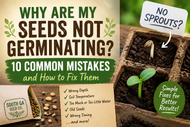
Why Are My Seeds Not Germinating? 10 Common Mistakes and How to Fix Them Part 1
Posted by Jennifer Dixon on 30th Jul 2026
There are few things more exciting in gardening than planting a seed and waiting for that first little sprout to appear.
You carefully prepare the soil, place each seed where it belongs, cover it gently, and give it a little water. Then every morning you walk outside expecting to see those first signs of life.
Sometimes, everything goes perfectly.
A tiny green seedling pushes through the soil, and before you know it, you're watching your garden come alive.
But sometimes...
Nothing happens.
You wait a few more days.
Still nothing.
You start wondering:
*"Did I do something wrong?
If you've ever experienced this, you're not alone. Every gardener—from someone planting their first vegetable garden to those who have been growing for decades—has had seeds that didn't sprout the way they expected.
The good news is that most seed germination problems have simple solutions.
Seeds are amazing little things. Inside every seed is everything needed to create a new plant, but they need the right environment to begin that process. When the conditions aren't right, the seed may simply wait until things improve.
Here on the farm, we spend a lot of time talking with gardeners about growing success. One thing we've learned over the years is that many gardening frustrations come down to a few common mistakes.
So before you give up on your garden, let's look at some of the reasons your seeds may not be germinating and what you can do to fix them.
Understanding Seed Germination
Before we talk about problems, it's helpful to understand what happens when a seed begins to grow.
A seed may look inactive, but inside it's waiting.
When the right conditions come together—proper moisture, temperature, oxygen, and time—the seed begins the process of germination.
The seed absorbs water, the outer shell softens, and the tiny root begins growing downward into the soil. Soon after, the first shoot begins pushing upward toward the light.
For this process to happen successfully, several things must be right:
The soil must have enough moisture
The temperature must be suitable for that type of seed
The seed must be planted at the correct depth
The seed must be healthy and viable
The growing environment must protect the seed while it starts
If even one of these things is off, germination can slow down or fail completely.
Mistake #1: Planting Seeds Too Deep
One of the most common mistakes beginners make is planting seeds too deeply.
It seems logical.
A seed goes underground, so many people assume deeper is better.
But seeds are not like bulbs or established plants. A tiny seed has limited energy stored inside. That energy has to power the seedling as it pushes toward the surface.
If the seed is buried too deeply, the young plant may run out of energy before it reaches sunlight.
Small seeds are especially sensitive to planting depth.
For example, crops like:
- Lettuce
- Carrots
- Basil
- Some flowers
often prefer very shallow planting.
Larger seeds like:
- Beans
- Peas
- Corn
- Squash
can generally be planted deeper because they contain more stored energy.
The best rule?
Follow the planting instructions on your seed packet.
Those recommendations are there because different seeds have different needs.
At South GA Seed Co., we include growing information because we want gardeners to have success after opening their seed packet. A successful garden begins with knowing what each variety needs.
Mistake #2: The Soil Temperature Is Wrong
This is a big one, especially for Southern gardeners.
Many people plant according to the calendar.
March arrives, so they plant tomatoes.
The problem?
The calendar doesn't tell the whole story.
Seeds respond to soil temperature.
Warm-season vegetables like:
- Tomatoes
- Peppers
- Eggplant
- Squash
- Cucumbers
- Beans
need warm soil before they will germinate well.
Planting them too early in cold soil can result in slow germination, weak seedlings, or seeds that simply rot before they ever emerge.
On the other hand, cool-season crops prefer different conditions.
Vegetables like:
- Lettuce
- Spinach
- Peas
- Radishes
perform better when temperatures are cooler.
This is one reason experienced gardeners pay attention to the weather, not just the date on the calendar.
A late cold snap or unusually cool spring can make a big difference.
* Jen's Garden Note
One lesson gardening teaches us over and over is that nature does not follow our schedule.
We've all been tempted to plant a little early because we're excited for the season to begin. Sometimes it works, and sometimes the weather reminds us who's really in charge.
Waiting for the right conditions is often better than rushing.
A seed planted at the right time has a much better chance than a seed planted simply because we were ready.
Mistake #3: The Soil Is Too Wet
Water is essential for germination.
But too much water can cause problems.
Seeds need moisture to begin growing, but they also need oxygen.
When soil stays constantly soaked, the tiny spaces between soil particles fill with water instead of air. This can prevent the seed from getting the oxygen it needs and may lead to rotting.
This is especially common in heavy clay soils or garden areas with poor drainage.
Signs your soil may be too wet:
- Water sits on the surface after rain
- Soil feels muddy instead of loose
- Seeds disappear or become mushy
- Seedlings emerge and quickly collapse
The solution is improving drainage and learning to water consistently without overdoing it.
A good seed bed should feel moist like a damp sponge—not like wet mud.
Adding compost and organic matter can help improve soil structure over time, making it easier for both water and air to move through the soil.
Mistake #4: The Soil Is Too Dry
The opposite problem can be just as frustrating.
A seed may begin the germination process, absorb moisture, and start growing—then stop if the soil dries out.
Newly planted seeds are especially vulnerable because they have very small root systems.
During warm weather, the surface of the soil can dry quickly, especially in sunny garden beds.
Helpful tips:
- Check newly planted areas regularly
- Water gently so seeds are not disturbed
- Use mulch to help maintain moisture
- Avoid letting the soil completely dry out during germination
Consistency matters.
Seeds don't need constant attention, but they do need the right conditions long enough to complete the process.
Mistake #5: Old or Poorly Stored Seeds
Seeds are amazing little packages of life, but like anything living, they don't stay viable forever.
One of the first questions I ask when someone says, "My seeds aren't growing," is:
"How old are the seeds, and how were they stored?"
Many gardeners assume that seeds are either good or bad, but the truth is somewhere in between. Some seeds can remain viable for many years under the right conditions, while others naturally have shorter storage lives.
Proper storage makes a huge difference.
Seeds prefer:
- Cool temperatures
- Dry conditions
- Protection from moisture
- Protection from extreme heat
A packet of seeds sitting in a hot garage or a damp garden shed may lose germination ability much faster than seeds stored in a cool, dry location.
This is especially important for gardeners who save seeds from year to year.
A simple storage system can go a long way. Many gardeners keep seeds in airtight containers, envelopes, or jars stored in a cool area away from humidity.
We understand that gardeners are investing time and effort into every planting. Quality seed storage and careful handling are important parts of helping gardeners have a successful growing season.
Can Old Seeds Still Grow?
Absolutely.
Many gardeners are surprised to learn that older seeds can still germinate if they have been stored properly.
Different types of seeds have different lifespans.
For example:
- Tomatoes can often remain viable for several years
- Beans and peas generally store well
- Lettuce can maintain good germination when stored properly
- Some herbs and flowers may lose viability sooner
If you're unsure about older seeds, you can always perform a simple germination test.
Place several seeds between damp paper towels, keep them warm, and check them over several days. This gives you an idea of whether those seeds are still ready to grow.
Remember, even experienced gardeners occasionally test older seeds. It's simply part of working with nature.
Mistake #6: Planting at the Wrong Time of Year
Timing is one of the most important parts of gardening.
A seed planted at the wrong time may struggle even if everything else is done correctly.
This is especially true in Southern gardens, where we often have long summers and mild winters but also face challenges from extreme heat and unpredictable weather.
Many new gardeners look at the calendar and think:
"It's April, so everything should be planted."
But plants don't read calendars.
They respond to:
- Soil temperature
- Day length
- Weather patterns
- Growing conditions
For example, tomatoes love warmth, but planting them too early when the soil is still cold can slow their growth.
On the other hand, lettuce and spinach may grow beautifully in spring but struggle once summer temperatures arrive.
Learning your growing season is one of the biggest steps toward becoming a successful gardener.
Understanding Your Growing Season
Every area has its own rhythm.
Here in the South, gardeners often have opportunities to grow longer than those in colder regions, but timing still matters.
Spring gardens may include:
- Lettuce
- Peas
- Radishes
- Spinach
- Carrots
Summer gardens thrive with:
- Tomatoes
- Peppers
- Beans
- Okra
- Squash
- Cucumbers
Fall gardens can bring another opportunity for cool-season crops when summer heat begins to fade.
A successful gardener learns to work with the seasons instead of fighting them.
Mistake #7: Wildlife Is Finding Your Seeds Before You Do
Sometimes your seeds are actually germinating...
You just never get to see it.
Birds, squirrels, and other small animals can be surprisingly good at finding freshly planted seeds.
A perfectly planted row can disappear overnight.
This is especially common with larger seeds like:
- Corn
- Beans
- Peas
- Sunflowers
Newly planted garden beds are vulnerable because the soil has been disturbed and the seeds are easy to find.
Ways to Protect Newly Planted Seeds
There are several simple ways to protect your garden while seeds are getting established:
Use Row Covers
Lightweight garden fabric can protect seeds and young seedlings while still allowing sunlight and moisture through.
Add a Light Mulch Layer
A thin layer of straw or fine mulch can help hide seeds while also maintaining moisture.
Be careful not to add too much, especially over small seeds that need to push through the soil.
Check Your Garden Regularly
The sooner you notice a problem, the easier it is to fix.
A quick morning walk through the garden can reveal disturbed soil, missing seeds, or other issues before they become bigger problems.
Mistake #8: Giving Up Too Soon
This may be one of the hardest lessons for new gardeners.
Patience.
We live in a world where most things happen quickly. We can order something online and have it delivered in days. We can look up an answer instantly.
But gardens work on their own timeline.
Seeds are not machines.
They are living things.
Some seeds sprout within a few days.
Others need more time.
For example:
- Radishes may appear quickly
- Beans often germinate fairly fast
- Peppers can take their time
- Parsley is known for being slow
- Some flowers require patience
A common mistake is assuming a seed has failed simply because it hasn't appeared yet.
Before replanting, check the expected germination time listed for that variety.
Sometimes the seed is working beneath the soil where you can't see it.
* Jen's Garden Note
One of my favorite things about gardening is that it teaches patience in a way few other things can.
When we plant a seed, we have to trust the process.
We water it.
We care for it.
We wait.
And then one day a tiny green sprout appears.
That moment never gets old.
Every gardener has experienced disappointment from seeds that didn't grow, but every gardener also knows the joy of seeing something beautiful come from something so small.
Don't let a few failed seeds discourage you.
Every season is another opportunity to learn.
A Few Extra Tips for Better Germination Success
While avoiding common mistakes will greatly improve your results, a few simple practices can make your garden even more successful.
Read Your Seed Packets
Seed packets contain valuable information:
- Planting depth
- Spacing recommendations
- Germination times
- Best growing season
- Sun requirements
Taking a few minutes to read those instructions can save a lot of frustration later.
Keep Garden Records
Experienced gardeners often keep notes from year to year.
Write down:
- What you planted
- When you planted it
- What worked well
- What you would change next season
Your garden journal becomes one of your most valuable tools.
Start With Quality Seeds
The journey of every garden begins with the seed.
Mistake #9: Not Providing Enough Oxygen
Most gardeners know seeds need water to grow, but many don't realize seeds also need oxygen.
During germination, a seed is waking up and beginning a process that requires energy. The tiny developing root needs oxygen to survive and grow properly.
When soil becomes compacted, oxygen cannot move easily around the seed.
This can happen when:
- Soil is heavily packed down
- Garden beds are walked on repeatedly
- Heavy clay soil becomes compacted
- Seeds are planted in areas with poor drainage
Even if the seed has the right moisture and temperature, compacted soil can prevent successful germination.
The solution is creating a healthier planting environment.
Before planting, loosen the soil and add organic matter such as compost to improve texture and airflow. A loose, well-prepared seed bed gives young roots the space they need to begin growing.
A good garden isn't just about feeding plants above the soil—it's also about creating a healthy environment below the surface.
Mistake #10: The Seeds Needed Special Treatment Before Planting
Some seeds are naturally more challenging to germinate because they have specific requirements before they will begin growing.
Not every seed responds the same way.
Some varieties have hard seed coats that benefit from preparation before planting. Others may need specific temperature changes or periods of moisture before they will sprout.
Examples include:
- Some flowers that require cold stratification
- Certain herbs with slow germination
- Seeds with hard outer coatings
- Some varieties that benefit from soaking before planting
This doesn't mean these seeds are difficult—it simply means they have their own natural process.
Learning the needs of each variety can make a tremendous difference.
This is why experienced gardeners take time to understand what they're planting. A seed isn't just a seed. Each variety has its own history, growing habits, and preferences.
The more we understand our seeds, the better we can help them succeed.
* Jen's Garden Note
One of the beautiful things about gardening is that every seed has its own story.
Some seeds seem eager to grow the moment they touch soil. Others take patience and a little extra care.
When a seed doesn't germinate, it doesn't always mean we did something wrong. Sometimes it simply means we need to better understand what that particular seed needed.
Gardening is a process of learning, observing, and improving with every season.
And that is what makes every successful harvest even more rewarding.
Click Here for Part 2, in which we cover:
- How to improve your germination success
- The importance of seed starting conditions
- Direct sowing vs starting indoors
- How light affects young seedlings
- Common seedling problems after germination
- More practical tips from South GA Seed Co.
To order seed Click Here