
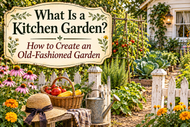
What Is a Kitchen Garden? How to Create an Old-Fashioned Garden
Posted by Jennifer Dixon on 2nd Nov 2026
I sometimes think we've made gardening more complicated than it needs to be.
We have books, gadgets, special fertilizers, elaborate raised beds, and enough gardening advice online to keep a person reading until midnight. And while there's certainly nothing wrong with learning new things, I believe we've overlooked something rather wonderful about the way people used to garden.
Long before grocery stores carried fresh herbs from halfway around the world, families often had a little garden close to the house. It wasn't necessarily fancy. It might have had a few rows of beans, some tomatoes, onions, cabbage, a patch of herbs, and flowers growing wherever there was room.
It was useful. It was familiar. And it served a purpose every single day.
That kind of garden is what we call a kitchen garden.
You may remember seeing one at your grandparents' home, or perhaps you've seen an old photograph of a garden tucked behind a farmhouse. Maybe there was a wooden fence around it, a narrow path running through the middle, and a few well-worn tools leaning against the shed.
There was something special about those gardens. They weren't planted just to look pretty. They were planted to be used.
And I think there's a lot we can learn from bringing that idea back.
────────────────────────────────────────
What Exactly Is a Kitchen Garden?
A kitchen garden is simply a garden grown to provide food, herbs, and other useful plants for the household.
Historically, kitchen gardens were often located close to the home, sometimes just outside the kitchen door. This made it convenient to gather vegetables, herbs, and fruit when preparing meals.
In early American households, these gardens could be an important part of everyday life. Fresh produce wasn't always easy to obtain, especially in places far from markets. Growing food at home helped families provide for themselves.
A traditional kitchen garden might include:
-
Tomatoes, beans, peas, and other vegetables
-
Onions, carrots, turnips, and cabbage
-
Culinary herbs such as sage, thyme, parsley, and rosemary
-
Flowers grown for beauty and practical household uses
-
Small fruits and berries where space allowed
Some gardens were simple little plots, while others were carefully divided into beds with paths, borders, and fences.
The size depended on the household, the available land, and how much food the family needed.
One thing I particularly like about the idea is that a kitchen garden doesn't have to be large. It doesn't even have to be in the ground. A few containers near the back door can serve the same purpose on a smaller scale.
────────────────────────────────────────
Why Our Grandparents Kept Gardens Close to the Kitchen
Think about preparing supper without being able to run to the grocery store for a bunch of fresh parsley or a few tomatoes.
If you needed something, you went outside and gathered it.
That was one of the main reasons kitchen gardens were kept close to the home. The closer the garden, the easier it was to tend, water, harvest, and use.
Imagine stepping outside to gather a handful of fresh herbs, pulling a few carrots, or picking a ripe tomato for supper.
You didn't need to plan a special trip to the garden. It was simply part of the day's routine.
There was also a practical reason for keeping frequently used plants nearby. A small garden could provide fresh ingredients while larger crops, such as corn, grains, and other field vegetables, were grown in separate areas.
The kitchen garden was the place for the things a household needed regularly.
And when you think about it, that is still a pretty sensible way to garden.
────────────────────────────────────────
The Vegetables That Belonged in an Old-Fashioned Kitchen Garden
The vegetables grown in a traditional kitchen garden varied from one region to another. Soil, climate, family traditions, and personal preferences all played a part.
But there were some dependable garden favorites that found their way into many American home gardens.
Beans
Beans were especially useful because they could be grown in relatively small spaces, particularly pole varieties that climbed supports instead of spreading across the ground.
A simple row of poles, a fence, or a homemade trellis could provide room for a surprising number of plants.
Beans could be harvested fresh, shelled, dried, or saved for another planting season.
Tomatoes
Tomatoes became a favorite in American home gardens because they were useful in so many ways.
They could be eaten fresh, cooked into sauces, canned, or preserved for later.
A few tomato plants could provide a household with plenty to enjoy during the growing season.
Peas
Garden peas were another useful crop, particularly in cooler growing seasons.
They could be grown along simple supports and harvested while young and tender. Like beans, they made good use of vertical space.
Onions
Onions were practical kitchen garden staples. They added flavor to everyday cooking and could be harvested as needed, depending on the variety and growing conditions.
Carrots and Turnips
Root vegetables were valuable because they could be used in soups, stews, and everyday meals.
Carrots need loose, workable soil to develop properly, while turnips can provide both roots and edible greens.
Cabbage and Collards
Leafy vegetables were important in many Southern gardens.
Collards, cabbage, mustard greens, and other cooking greens provided food that could be prepared in a variety of ways.
Of course, no two family gardens were exactly alike. Some grew more greens, others had more beans or tomatoes, and some made room for vegetables that had been passed down through generations.
That's part of what makes old garden traditions so interesting.
────────────────────────────────────────
The Herbs Every Kitchen Garden Ought to Have
If vegetables were the backbone of a kitchen garden, herbs were some of its most useful companions.
They didn't take up much room, and a little could go a long way in the kitchen.
Many herbs could be grown along the edges of garden beds, near the back steps, or in small containers close to the house.
Here are a few worth including in your own kitchen garden.
Sage
Sage has a wonderful fragrance and is especially useful in cooking. It pairs well with poultry, beans, and hearty dishes.
Thyme
Thyme is a small, hardy herb with plenty of kitchen uses. It works beautifully in soups, roasted vegetables, and seasoning blends.
Parsley
Parsley is one of those herbs that seems to belong in almost every kitchen. It can be used fresh in salads, sauces, soups, and many other dishes.
Basil
Basil is especially useful during tomato season. Fresh basil and ripe garden tomatoes are a combination that's hard to beat.
Rosemary
Rosemary is fragrant and flavorful, and it can be grown in a garden bed or container where conditions suit it. It is particularly useful for seasoning roasted vegetables and meats.
Mint
Mint has long been enjoyed in teas, drinks, and cooking. It is best grown in its own container because it can spread aggressively when planted directly in the ground.
You don't need every herb available. Start with the ones you actually use, and add others as you become more comfortable growing them.
────────────────────────────────────────
Why Flowers Were Planted Alongside Vegetables
One thing I love about old-fashioned gardens is that they weren't always separated into neat little sections of vegetables here, flowers there, and herbs somewhere else.
Flowers often had a place among the useful plants.
Some were grown simply because people enjoyed their color and fragrance. Others were valued for traditional household uses, while many flowering plants attracted bees and other beneficial insects.
Calendula, nasturtiums, marigolds, and other familiar flowers can still make wonderful additions to a kitchen garden.
Flowers can also help make a vegetable garden more inviting to pollinators, although not every flower attracts the same insects, and a flower beside a vegetable doesn't automatically make it a good companion.
For crops that depend on pollination, having a variety of flowering plants blooming throughout the growing season can help provide food for visiting pollinators.
And let's be honest. A garden full of tomatoes, herbs, and flowers is simply a lovely place to spend an afternoon.
────────────────────────────────────────
How Old-Fashioned Gardens Made Use of Every Inch
Our ancestors didn't always have the luxury of dedicating large areas of land to gardening. They learned to make good use of what they had.
Some of those methods are just as useful today.
Growing Up Instead of Out
Pole beans, peas, and climbing plants can be trained to grow vertically.
A fence, trellis, or sturdy support can make better use of limited garden space.
Planting in Succession
Instead of planting everything at once, gardeners can sow certain crops at different intervals.
This helps spread out harvests and makes better use of the growing season.
Using the Edges
The edges of garden beds can provide room for herbs, flowers, and smaller plants.
A little planning can turn otherwise unused space into something productive.
Mixing Useful Plants
A kitchen garden doesn't have to be divided into separate areas for every crop.
Vegetables, herbs, and flowers can be grown together when their sunlight, spacing, watering, and soil requirements are compatible.
The important thing is to give each plant enough room to grow well.
────────────────────────────────────────
How to Create Your Own Old-Fashioned Kitchen Garden
You don't need an old farmhouse, acres of land, or a collection of antique gardening tools to create a kitchen garden.
You just need a little space and a willingness to grow something.
Here's where I'd begin.
-
Choose a Convenient Location
If possible, place your garden near the kitchen or back door.
A convenient location makes it easier to water, harvest, and keep an eye on your plants.
Most vegetables and many herbs need at least six hours of direct sunlight daily, so choose a sunny location.
-
Start With a Few Garden Beds
You can use traditional in-ground rows, raised beds, or containers.
Keep the layout simple. Leave enough room to walk between beds without stepping on the growing soil.
You don't need a complicated design to have a productive garden.
-
Grow What Your Household Uses
This is where a kitchen garden becomes personal.
If your family enjoys tomatoes, plant tomatoes. If you cook with fresh herbs, make room for basil, parsley, and thyme.
If you enjoy greens, consider collards, kale, or mustard.
There is little reason to devote valuable garden space to vegetables nobody wants to eat.
-
Add a Few Flowers
Plant flowers around the edges or between compatible crops.
Choose varieties that bloom at different times so pollinators have a continuing source of food.
-
Improve Your Soil
Healthy soil makes a tremendous difference.
Work in finished compost or other suitable organic matter to improve soil structure and support healthy plant growth.
Avoid assuming that more fertilizer is always better. Different crops have different nutrient needs, and a soil test can help you understand what your garden actually needs.
-
Keep a Garden Journal
This is something I wish more gardeners would do.
Write down what you planted, when you planted it, how well it grew, and what you harvested.
Make a note of varieties that performed especially well.
Over time, those little notes become a valuable record of your own garden.
────────────────────────────────────────
Why Heirloom Seeds Belong in an Old-Fashioned Kitchen Garden
There is something fitting about growing heirloom vegetables in a garden inspired by the past.
Many heirloom varieties have long histories, and some have been passed down through families and communities because gardeners valued their flavor, appearance, or usefulness.
They remind us that vegetables don't all have to look alike or come from a grocery store display.
A Cherokee Purple tomato, a Whippoorwill cowpea, an old-fashioned collard, or a colorful pepper variety can bring a little history into an everyday garden.
But one thing is important to understand: a variety being called heirloom doesn't automatically mean it will grow well in every location.
Local climate, soil, disease pressure, and growing conditions still matter.
Choose varieties suited to your region and learn how they perform in your own garden.
And if you grow open-pollinated varieties, you may also have the opportunity to save seed for future seasons, provided you follow the appropriate isolation and seed-saving practices for each crop.
That is one of the things I find so rewarding about gardening. You aren't just growing food for today. You're learning, selecting, and sometimes preserving something for tomorrow.
────────────────────────────────────────
A Kitchen Garden Doesn't Have to Be Perfect
I think sometimes we get so caught up in making a garden look a certain way that we forget what it is supposed to do.
A kitchen garden is meant to be used.
There may be weeds along the fence. A tomato plant may get a little taller than expected. The basil might need trimming, and the beans may decide to climb somewhere you didn't intend.
That's gardening.
You don't have to have perfectly straight rows or a picture-perfect arrangement to enjoy a productive garden.
Start small. Learn what grows well. Pay attention to your soil and your plants. And don't be afraid to change things around next season.
Some of the best gardens are the ones that develop naturally over time.
────────────────────────────────────────
From Jen's Garden
I believe there is something worth preserving about the old way of looking at a garden.
It wasn't just a place to grow a few vegetables. It was part of the household. It provided food, flavor, beauty, and sometimes a little peace at the end of a busy day.
I love the thought of someone stepping outside to gather a handful of parsley, picking a ripe tomato, or cutting a few flowers to bring inside.
Those are simple pleasures, but they are still pleasures worth having.
And perhaps that's what I like most about the kitchen garden. It reminds us that we don't need to make everything complicated. We can grow a few useful things, take care of them, and enjoy what they provide.
Maybe you have room for a full garden. Maybe all you have is a few pots beside the back door.
Either way, you can bring a little of that old-fashioned gardening tradition into your own home.
And I think that's a pretty good thing to bring back.
────────────────────────────────────────
Final Thoughts
The traditional kitchen garden was practical, personal, and closely connected to everyday life.
It provided vegetables for the table, herbs for cooking, and flowers that brought color and life into the garden.
Today, we can borrow many of those same ideas and make them work in our own spaces.
Grow what you enjoy eating. Make room for a few herbs and flowers. Take care of your soil. Save seeds when appropriate, and keep learning from one growing season to the next.
You may find that a simple kitchen garden gives you much more than fresh vegetables.
It may give you a reason to slow down, spend a little more time outdoors, and enjoy some of the simple things that made gardening such a treasured part of home life.
And sometimes, simple is exactly what we need.
To order seeds Click Here
────────────────────────────────────────