
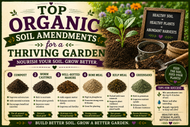
Top Organic Soil Amendments for a Thriving Garden
Posted by Jennifer Dixon on 15th Dec 2025
Healthy soil is the foundation of a productive garden. Organic soil amendments can improve soil structure, add nutrients, support beneficial microorganisms, and help create better growing conditions for your plants. Whether you're preparing a new garden bed or improving an established one, there are several natural amendments worth considering.
1. Compost
Compost is often called "black gold" for good reason. It adds organic matter and a wide range of nutrients to the soil while improving soil structure, water retention, and microbial activity. Compost can be made from materials such as kitchen scraps, yard waste, and manure, making it a practical amendment for almost any garden.
Benefits of Compost:
- Improves soil fertility: Adds organic matter and a balanced supply of nutrients.
- Enhances soil structure: Helps improve aeration and drainage.
- Supports beneficial microorganisms: Provides an environment where helpful soil organisms can thrive.
2. Worm Castings
Worm castings, also known as vermicompost, are produced by earthworms as they break down organic material. They are rich in nutrients and beneficial microorganisms and can help improve soil structure while making nutrients more available to plants.
Benefits of Worm Castings:
- Rich in nutrients: Provides essential minerals and trace elements.
- Improves moisture retention: Helps soil hold moisture while maintaining good growing conditions.
- Gentle and plant-friendly: Can be used around a wide variety of plants.
3. Bone Meal
Bone meal is a finely ground amendment made from animal bones and is a source of phosphorus and calcium. It is commonly used around flowering plants and root crops because phosphorus plays an important role in root development and flowering. Bone meal can be incorporated into the soil when planting or used as a side dressing during the growing season.
Benefits of Bone Meal:
- Supports root growth: Supplies phosphorus that plants use during root development.
- Supports flowering: Can be useful for flowering plants when soil phosphorus is low.
- Slow-release nutrient source: Releases nutrients gradually over time.
4. Blood Meal
Blood meal is a high-nitrogen amendment made from dried animal blood. It can be useful for gardens where plants need additional nitrogen, particularly leafy greens and other plants that produce abundant foliage. Blood meal can also influence soil acidity, so it is best used according to the needs of your soil and plants.
Benefits of Blood Meal:
- Provides nitrogen: Useful for plants with high nitrogen requirements.
- Supports leafy growth: Can encourage healthy foliage when additional nitrogen is needed.
- May help deter some pests: Its strong odor can discourage certain garden pests.
5. Fish Emulsion
Fish emulsion is a liquid fertilizer made from fish-processing byproducts. It provides nutrients, including nitrogen, along with trace elements that can support healthy plant growth. Because it is fast-acting, fish emulsion is often used when plants need a quick nutrient boost during the growing season.
Benefits of Fish Emulsion:
- Quick-acting fertilizer: Provides nutrients that plants can access relatively quickly.
- Contains trace elements: Supplies additional nutrients that support overall plant growth.
- Versatile application: Can be diluted and applied to the soil or used as a foliar feed according to product directions.
6. Green Manures and Cover Crops
Green manures and cover crops are plants grown specifically to benefit the soil. They can be tilled or worked back into the soil, adding organic matter while helping protect the ground between growing seasons. Common cover crops include clover, vetch, and rye.
Benefits of Green Manures and Cover Crops:
- Improves soil fertility: Adds organic matter and nutrients to the soil.
- Suppresses weeds: Helps reduce competition for sunlight, water, and nutrients.
- Helps prevent erosion: Keeps soil covered and protected during periods when the garden is not being actively grown.
Building Healthier Garden Soil
Improving soil doesn't have to mean relying on complicated products or synthetic fertilizers. Organic amendments such as compost, worm castings, bone meal, blood meal, fish emulsion, and cover crops can all have a place in the garden.
The best amendment depends on what your soil and plants actually need. Adding organic matter regularly, keeping the soil covered when possible, and paying attention to soil fertility can go a long way toward creating healthy, productive garden beds.
With a little attention to the soil beneath your plants, you can build a garden that stays productive season after season.