
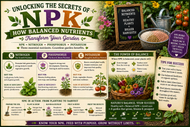
Unlocking the Secrets of NPK: How Balanced Nutrients Transform Your Garden
Posted by Jennifer Dixon on 27th Dec 2025
Understanding NPK: The Three Nutrients Plants Need
If you have ever looked at a bag of fertilizer, you have probably noticed three numbers listed on the front. These numbers represent NPK—nitrogen (N), phosphorus (P), and potassium (K). Each of these nutrients plays a different role in plant growth, and understanding what they do can help you make better decisions in the garden.
1. Nitrogen (N) – Supporting Healthy Leaf Growth
Nitrogen is especially important for vegetative growth. Plants use nitrogen to produce chlorophyll, the pigment that gives leaves their green color and allows plants to capture energy from sunlight through photosynthesis.
Adequate nitrogen encourages healthy foliage and strong overall growth, which is particularly important for leafy vegetables such as lettuce, spinach, kale, and other greens. However, more nitrogen is not always better. Excessive nitrogen can encourage lots of leafy growth while reducing flowering or fruit production in some plants.
The goal is not simply to add more nitrogen, but to provide the amount a plant needs for healthy growth at the appropriate stage of development.
2. Phosphorus (P) – Roots, Flowers, and Energy
Phosphorus plays an important role in how plants store and transfer energy. It is involved in several essential plant processes, including root development, growth, and reproduction.
Healthy phosphorus levels are particularly important while young plants are developing their root systems. Phosphorus is also involved in flowering and seed production, making it an important nutrient throughout a plant's life cycle.
Rather than automatically adding extra phosphorus when plants begin flowering, it is better to consider the condition of the soil first. A soil test can help determine whether additional phosphorus is actually needed.
3. Potassium (K) – Strength and Stress Tolerance
Potassium helps regulate several important functions within plants. It plays a role in water movement, enzyme activity, and overall plant strength. Adequate potassium can help plants handle environmental stresses and maintain healthy growth.
Potassium is also important during the development of fruits and other plant structures. When potassium is lacking, plants may show signs such as weak growth, poor development, or changes in leaf appearance. However, these symptoms can have several possible causes, so testing the soil is often the best way to determine whether potassium is actually deficient.
Why NPK Balance Matters
One of the most important things to remember about NPK is that plants do not necessarily need the same nutrient balance throughout their entire lives. Young plants, leafy vegetables, flowering plants, and fruiting crops can have different nutritional needs.
That does not mean gardeners should constantly change fertilizers as a plant grows. Instead, it is important to understand what the plant needs, pay attention to its growth, and avoid adding nutrients that the soil already contains in sufficient amounts.
Soil Testing: Start With What Your Garden Already Has
Before reaching for a fertilizer, consider having your soil tested. A soil test can provide useful information about nutrient levels and soil conditions, helping you determine whether your garden actually needs additional nitrogen, phosphorus, potassium, or other nutrients.
Good soil management is about more than simply adding fertilizer. By understanding NPK and paying attention to your soil, you can provide plants with the nutrients they need while avoiding unnecessary applications.
Growing Better Starts With Understanding Your Soil
Nitrogen, phosphorus, and potassium each have an important job in the garden. Nitrogen supports leafy growth, phosphorus contributes to root development and energy processes, and potassium helps plants regulate water and maintain overall strength.
When you combine a good understanding of NPK with healthy soil practices and regular observation, you can give your plants a better foundation for strong, productive growth.
Related Gardening Guides
- Top Organic Soil Amendments for a Thriving Garden
- Why Earthworms Are Every Gardener's Best Friend
- Why Organic Gardens Need Less Water
- The Organic Gardener's Secret: Feed the Soil, Not the Plant
- Why Old Southern Gardens Rarely Had Bare Soil
- What to Plant in August in Georgia: A Southern Gardener's Guide