
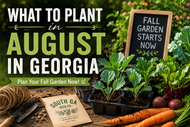
What to Plant in August in Georgia: A Southern Gardener's Guide
Posted by Jennifer Dixon on 12th Aug 2026
August can make a gardener want to throw in the towel.
The garden has been producing all summer, the weeds seem to grow faster than the vegetables, and the heat can make even walking outside feel like a chore.
But August isn't the end of the gardening season.
In Georgia, August is really a month of transition. Your summer garden may still be producing, but you're also looking ahead to cooler temperatures and another opportunity to grow fresh vegetables.
If you're wondering what to plant in August in Georgia, the answer isn't necessarily more summer vegetables.
This is the time to start thinking about fall.
Cabbage.
Broccoli.
Collards.
Kale.
Mustard greens.
Turnips.
Radishes.
Beets.
Carrots.
Lettuce.
Spinach.
These cool-season vegetables can give you another productive garden after the worst of the summer heat has passed.
The trick is knowing when to start them, where to start them, and how to get those young plants through the hottest part of August.
August Isn't the End of the Garden
One of the biggest misconceptions about gardening in the South is that once July and August arrive, the garden is finished.
It can certainly feel that way.
By August, some tomato plants are looking tired. Earlier beans may have finished producing. Weeds have had an entire summer to get comfortable, and the heat can make even a quick trip into the garden feel like hard work.
But don't give up yet.
August is actually one of the months when experienced gardeners are already thinking about what's next.
While you're harvesting the last of your summer crops, you're also making room for fall.
That's one of the wonderful things about gardening in Georgia.
We have a long growing season, and with good planning, the garden doesn't have to stop when summer ends. Instead, the crops change as the temperatures change.
The warm-season garden gradually gives way to vegetables that prefer cooler weather.
And before you know it, you're standing in the garden on a crisp fall morning harvesting greens and root vegetables.
The August Garden Is About Transition
I think one of the easiest ways to look at August gardening is to think of it as a bridge.
You're leaving one growing season while preparing for the next.
That means you don't necessarily need to fill every empty space with another summer crop.
Instead, look at the garden you already have.
Which plants are finished?
Which ones are still producing?
Where will you have open space once those plants are removed?
Those empty spaces can become your fall garden.
Remove plants that are no longer productive and clear away weeds. If plants have been affected by significant insect or disease problems, dispose of them appropriately rather than automatically adding them to your compost pile.
Once the space is cleared, take a look at the soil.
After an entire summer of growing, your garden has used nutrients and endured plenty of heat and watering.
August is a good time to prepare the soil before your fall crops go in.
Give Your Soil Some Attention
Healthy soil is one of the best investments you can make in any garden.
If your soil has become compacted, work it gently to loosen the planting area. Adding organic matter such as finished compost can help improve soil structure and moisture retention.
This is also a good time to consider having your soil tested if you haven't done so recently.
A soil test can tell you much more than simply whether your garden needs fertilizer. It can help you understand soil pH and nutrient levels so that you aren't adding amendments blindly.
That's especially helpful when preparing for a fall garden because many cool-season vegetables are fairly heavy feeders.
Instead of guessing what your soil needs, let the soil test help guide you.
A little preparation now can make planting much easier later.
What Can You Start in August?
Now we get to the part gardeners really want to know.
What should you actually be doing with those seed packets in August?
For many fall vegetables, August is the month to start seeds in a protected location rather than immediately putting tiny seedlings into the hottest part of the garden.
UGA Extension specifically recommends starting crops such as broccoli, cabbage, cauliflower, collards, kale, and onions in a partially shaded area during August, with the goal of having transplants ready as temperatures become more manageable.
This approach makes a lot of sense.
Young seedlings are much more vulnerable to extreme heat than established plants.
A little protection can give them the opportunity to develop roots and leaves before they face the garden.
Broccoli
Broccoli is one of the vegetables worth getting started for the fall garden.
Because broccoli takes longer to mature than some quick-growing greens, timing matters.
Starting plants in August gives them time to develop before cooler weather settles in.
Broccoli can be started in trays or another protected growing area and transplanted once conditions are more favorable.
If you're starting your own broccoli plants, keep them watered and protected from the harshest afternoon heat while they're young.
The goal isn't to keep them pampered forever.
It's simply to help them get established.
Cabbage
Cabbage is another excellent crop for the fall garden.
There are many different varieties, and maturity times can vary considerably, so pay attention to the information for the specific variety you're growing.
Cabbage can be started from seed or transplanted as young plants.
If you're starting from seed during August, give those seedlings a little protection from the intense summer sun.
Once temperatures begin moderating, they'll be much easier to establish in the garden.
One of the nice things about growing cabbage in the fall is that you're moving away from some of the intense heat that makes summer gardening so challenging.
Cauliflower
Cauliflower can be a little more particular than some other fall vegetables, but it's still worth considering if you enjoy growing it.
Like broccoli and cabbage, cauliflower takes time to mature, so starting plants early enough is important.
Young cauliflower seedlings should be protected from extreme heat while they're getting established.
A partially shaded location can help reduce heat stress during the hottest part of August.
Once the weather begins to cool, you can move the plants into their permanent garden location.
Collards
If you live in the South, there's a good chance collards already have a place at your table.
They're also a wonderful choice for a fall garden.
Collards are well suited to cooler weather and can provide harvests as the season changes.
Starting collards in August gives the plants time to establish before fall temperatures arrive.
And once the weather cools, you may find that the plants become even more enjoyable to grow.
There's something satisfying about walking into the garden on a cool fall morning and picking fresh greens for dinner.
Kale
Kale is another cool-season crop worth adding to your fall plans.
It can be started from seed, and once established, it handles cooler weather well.
Like other young fall crops, kale may appreciate some protection from the intense August heat while it is getting started.
Once temperatures moderate, it can settle into the garden and continue growing.
Mustard Greens
Mustard greens are one of the quicker crops you can add to a fall garden.
They don't require the long growing period that some larger vegetables need, making them a good choice for gardeners who want something that can provide a harvest relatively quickly.
The cooler weather of fall can also bring out the qualities that make mustard greens so popular in Southern cooking.
If you enjoy greens, mustard is definitely worth considering for your fall garden.
Turnips
Turnips are another classic cool-season crop.
They're useful because you can enjoy both the roots and, depending on the variety, the greens.
They also don't require the long growing season that some fall vegetables do.
Once temperatures begin to cool, turnips can become a productive addition to the garden.
They're a good example of why fall gardening can be so rewarding.
The weather becomes more comfortable, the crops are growing steadily, and you're not fighting the extreme heat that comes with summer.
Radishes
If you're looking for a quick crop, don't overlook radishes.
They are among the faster-growing vegetables in the fall garden and can be a great choice for gardeners who don't want to wait months for their first harvest.
Radishes also make a nice crop for children because they develop relatively quickly.
Plant them in loose soil, keep the seed bed evenly moist, and watch for those first little leaves to appear.
Beets
Beets are another crop worth considering as summer transitions toward fall.
They prefer cooler growing conditions and can be grown for both their roots and greens.
Because the edible root develops underground, loose soil is especially helpful.
If your garden soil is heavy or compacted, take some time to prepare it before planting.
A little attention to the soil can make it easier for developing roots to grow.
Carrots
Carrots are one of those vegetables where soil preparation really matters.
If you've ever grown a crooked carrot, you already know why.
Hard, compacted soil can cause roots to struggle as they develop.
Before planting carrots, loosen the soil well and remove large rocks or clumps that could interfere with root development.
Carrots also need consistent moisture while they're getting established.
The August heat can make that challenging, which is another reason many gardeners wait until conditions begin moderating before direct-sowing them.
Lettuce and Spinach
Lettuce and spinach are both excellent crops for cooler weather.
They can be wonderful additions to a fall garden, but timing is important.
August can still be extremely hot in Georgia, and these crops don't appreciate being forced to grow through the worst of the summer heat.
Instead, watch the weather and plan your planting around the transition into cooler conditions.
Once the temperatures begin to moderate, lettuce and spinach can become some of the most rewarding crops in the garden.
Starting Seeds in the Heat
One of the biggest challenges of August gardening is that many of the vegetables we want for fall don't particularly enjoy August temperatures.
That creates an interesting situation.
The seed needs to be started early enough to produce a fall harvest, but the weather isn't necessarily ideal for young plants.
This is where a partially shaded seed-starting area can be incredibly useful.
A protected area can help reduce the intensity of the afternoon sun while still giving young seedlings the light they need.
Keep the growing medium consistently moist, but avoid keeping it saturated.
Check your seedlings regularly.
August heat can dry out small containers surprisingly quickly.
A seedling that looked perfectly happy in the morning may be struggling by afternoon if it has dried out.
Don't Rush the Fall Garden
There's a temptation in gardening to look at a planting calendar and think you have to plant everything on one particular day.
But weather doesn't always cooperate.
Georgia can have stretches of intense heat well into August and September.
That's why it's important to pay attention to your specific location and the conditions in your garden.
Planting dates are guidelines, not guarantees.
Your local climate, first frost date, soil conditions, and the particular variety you're growing all matter.
UGA's planting charts provide recommended windows, but those windows can vary depending on the crop and region of Georgia.
The goal is to give your plants enough time to mature without forcing cool-season crops through more heat than they can handle.
August Is Also a Good Time to Plan Ahead
While you're preparing your fall garden, don't forget that gardening is always a little bit about looking ahead.
Take notes.
What performed well this year?
Which varieties struggled?
Which vegetables did your family actually eat?
What would you like to grow more of next season?
A garden journal doesn't have to be complicated.
Even a simple notebook can become incredibly valuable after a few years.
You may eventually discover that you have your own planting calendar based on what works best in your particular garden.
That's something no generic gardening calendar can completely replace.
From Jen's Garden
August can be a strange month in the garden.
It doesn't always feel like the beginning of anything.
It feels hot.
It feels tired.
Sometimes the garden looks like it has already given you everything it had to give.
But underneath all of that, another season is waiting.
That's what I love about gardening.
There's almost always something coming next.
As one crop finishes, another begins.
As the summer heat starts to fade, the cool-season vegetables are waiting for their chance.
So don't look at August as the month when your garden is finished.
Look at it as the month when you start preparing for what's next.
Clear out what has finished.
Take care of your soil.
Start those fall seeds.
And keep looking ahead.
Because before long, those first cool mornings will arrive, and you'll be glad you did.
Key Takeaways
• August is a transition month in Georgia, moving the garden from summer production toward the fall growing season.
• Many fall vegetables are best started in August in a partially shaded, protected location.
• Broccoli, cabbage, cauliflower, collards, kale, and onions can be started for later transplanting.
• Beets, carrots, lettuce, mustard, radishes, spinach, and turnips are important cool-season crops to plan for as temperatures moderate.
• Young seedlings need consistent moisture during hot August weather.
• Preparing your soil before fall planting can make a significant difference in plant growth.
• Remove finished or diseased summer plants before preparing the space for fall crops.
• Pay attention to your local weather and planting windows rather than relying solely on the calendar.
• Keep notes about what works in your garden so each season becomes easier and more productive.
Continue Your Gardening Journey
August is the perfect time to start looking beyond the summer garden. Once you've cleared finished crops and begun your fall seeds, the next step is learning how to give those new plants the best possible growing conditions.
Continue reading our gardening guides for more practical advice on preparing soil, starting seeds, and growing a productive garden throughout the seasons.
To order seeds Click Here
Related Gardening Guides
- How to Start Your First Vegetable Garden: A Simple Guide That Actually Works Part 1
- Why Are My Seeds Not Germinating?
- Best Heirloom Vegetables for Small Gardens
- Best Tomatoes for Humid Southern Summers
To order seeds Click Here