
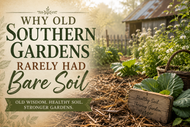
Why Old Southern Gardens Rarely Had Bare Soil
Posted by Jennifer Dixon on 26th May 2026
Why Old Southern Gardens Rarely Had Bare Soil
If you walked through many old Southern gardens generations ago, you likely would not have seen rows of exposed dirt baking beneath the summer sun.
Instead, the soil was often covered.
Straw lined pathways between vegetables. Fallen leaves settled beneath beans and tomatoes. Grass clippings, pine needles, compost, and natural mulch protected the earth from harsh heat and drying winds.
To older gardeners, bare soil was rarely considered healthy soil.
Long before modern gardening trends popularized mulching and regenerative practices, Southern growers already understood something important:
Nature almost never leaves soil uncovered.
At South GA Seed Co., we believe some of the best gardening wisdom was quietly passed down long before it became fashionable again.
Bare Soil Struggles Under Southern Heat
Southern summers can be unforgiving.
Under intense sunlight, exposed soil quickly becomes:
-
dry
-
compacted
-
overheated
-
vulnerable to erosion
Moisture evaporates rapidly, beneficial organisms suffer, and weeds often move in to reclaim the empty ground.
Older gardeners learned through experience that protecting the soil helped protect the entire garden.
Covering the ground naturally moderated temperature while helping soil remain softer and more biologically active.
Mulch Was Once Simply Part of Gardening
For many Southern families, mulching was not viewed as a special gardening technique.
It was simply how gardens were cared for.
Gardeners commonly used:
-
straw
-
leaves
-
pine needles
-
grass clippings
-
wood chips
-
compost
-
crop residue
These natural materials slowly broke down over time, feeding the soil while protecting it from the elements.
Nothing was wasted.
Many old gardens functioned almost like living ecosystems where organic material constantly returned back to the earth.
Healthy Soil Was Treated Like Something Alive
One reason older gardens often remained productive for decades was because the soil itself was carefully protected.
Healthy soil contains:
-
fungi
-
microbes
-
earthworms
-
insects
-
organic matter
-
beneficial bacteria
Bare soil exposed to constant heat and disturbance can quickly lose much of that biological activity.
Mulch helped preserve moisture and create a cooler, more stable environment where soil life could thrive naturally.
The healthiest gardens often began beneath the surface.
Covered Soil Holds Moisture Longer
One of the greatest advantages of mulch is water retention.
In hot Southern climates, covered soil can remain noticeably cooler and moist compared to exposed ground.
This means:
-
less watering
-
healthier root systems
-
reduced plant stress
-
improved drought resilience
Older gardeners understood this long before irrigation systems became common.
Natural ground cover acted almost like insulation for the garden.
Mulch Helped Suppress Weeds Naturally
Another benefit of keeping soil covered was weed suppression.
When sunlight cannot easily reach bare soil, many weed seeds struggle to germinate.
This reduced:
-
labor
-
soil disturbance
-
moisture loss
-
competition between crops and weeds
Many traditional gardeners relied more on prevention and balance rather than constant intervention.
Nature Rarely Leaves Soil Bare
Walk through a forest, meadow, or healthy field and you will notice something important:
The ground is usually covered.
Leaves, grasses, fallen branches, and decaying organic matter form protective layers over the soil.
Older Southern gardeners often worked with these natural patterns rather than against them.
Gardens that mimic nature frequently become:
-
healthier
-
more resilient
-
more biologically active
-
easier to maintain over time
Bringing Old Wisdom Back Into Modern Gardens
Today, many gardeners are rediscovering practices that older generations once considered common sense.
Mulching, composting, cover cropping, and protecting soil biology are all becoming increasingly valued again as people search for more sustainable ways to grow food.
And perhaps one of the simplest lessons remains one of the most important:
Healthy soil is rarely left exposed for long.
At South GA Seed Co., we believe thriving gardens begin by caring for the life beneath our feet.
Because when the soil is protected, the entire garden grows stronger.
To order seeds Click Here