
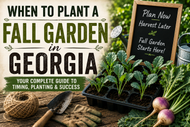
When to Plant a Fall Garden in Georgia: Complete Guide
Posted by Jennifer Dixon on 24th Aug 2026
When to Plant a Fall Garden in Georgia: A Complete Guide for Southern Gardeners
By Jennifer Dixon | South GA Seed Co.
There is something about the first cool morning after a long Southern summer that makes me want to get back out in the garden.
After months of heat, humidity, weeds, insects, and vegetables that seem to grow faster than you can pick them, that first hint of fall feels like a fresh start.
And in Georgia, it really is.
A lot of gardeners think the vegetable garden is finished once summer begins winding down.
It isn't.
Fall can actually be one of the best times of year to grow vegetables in Georgia.
The temperatures become more comfortable, many cool-season vegetables thrive in the changing weather, and some of the problems that make summer gardening difficult begin to ease.
But there is one catch.
You have to plan ahead.
The vegetables we harvest in October and November often need to be planted while it still feels very much like summer outside.
That can be a little confusing for a new gardener.
You're standing outside in August, sweating in the Georgia heat, and I'm telling you it's time to start planting cabbage and broccoli.
It doesn't always seem to make sense.
But that's exactly how fall gardening works in the South.
Fall Gardening Begins Before Fall
One of the biggest mistakes new gardeners make is waiting until the weather actually feels like fall before planting a fall garden.
By then, you've often waited too long.
Cool-season vegetables need time to germinate, establish roots, grow leaves, and mature before colder weather arrives.
UGA Extension recommends starting many fall crops in August, even though temperatures are still high, with crops such as broccoli, cabbage, cauliflower, collards, kale, turnips, radishes, spinach, lettuce, beets, and onions among those that can be started for the fall garden.
That doesn't mean every seed needs to go directly into the garden in August.
In fact, some vegetables are better started in trays or another protected location while the worst of the summer heat is still hanging around.
Broccoli, cabbage, cauliflower, collards, kale, and onions can be started in a partially shaded area and transplanted later as conditions become more favorable.
This is one of those little gardening tricks that can make a big difference.
You're essentially giving your plants a head start while protecting them from the hardest part of August.
Georgia Doesn't Have One Perfect Planting Date
This is something I really want new gardeners to understand.
There isn't one magic date when everyone in Georgia should plant their fall garden.
Georgia is a long state.
The growing conditions in the mountains aren't the same as those along the coast, and central Georgia doesn't necessarily follow the exact same schedule either.
Fall planting dates can vary depending on where you live in Georgia, so always consider your local climate and growing conditions.
That's important.
A planting date you find online may be a great starting point, but you should always consider your own location and local weather.
That's one reason I don't like telling gardeners:
"Plant this on August 15th, no matter what."
Gardening doesn't work that way.
Weather doesn't read calendars.
Some years August can be brutally hot.
Other years, temperatures begin moderating earlier.
Your garden may also behave differently depending on whether it's in full sun, partial shade, a raised bed, or a location that holds moisture well.
Use planting dates as a guide, then pay attention to what's happening outside your own back door.
Start With Your First Frost Date
One of the most useful pieces of information for planning a fall garden is your area's average first frost date.
Why?
Because your vegetables need enough time to mature before freezing temperatures arrive.
Fall planting dates are based in part on average first-killing-frost dates, but averages aren't guarantees. Individual years can be warmer or colder than the long-term average.
Once you know your approximate first frost date, you can work backward.
Look at the number of days to maturity listed for the variety you're growing.
Then give yourself some extra time.
This is particularly important with fall vegetables because "days to maturity" isn't always as simple as it sounds.
A seed packet might say 60 days.
That doesn't necessarily mean you'll harvest exactly 60 days after planting.
Weather, soil conditions, watering, transplanting, and other factors can all affect growth.
That's why I prefer giving plants a little breathing room rather than trying to plant on the absolute last possible day.
What Should You Plant for a Georgia Fall Garden?
This is where fall gardening gets exciting.
There are quite a few vegetables that can perform well as temperatures begin to cool.
Some of the most common choices include:
• Broccoli
• Cabbage
• Cauliflower
• Collards
• Kale
• Mustard greens
• Turnips
• Radishes
• Beets
• Carrots
• Lettuce
• Spinach
• Onions
But they don't all need to be planted in exactly the same way.
And they don't all have the same planting window.
That's where understanding your individual crops becomes important.
Some Vegetables Are Better Started as Transplants
If you've ever tried starting broccoli or cabbage from seed during the hottest part of summer, you already know it can be a little tricky.
Those tiny seedlings don't exactly appreciate being baked in the afternoon sun.
That's why some fall crops are easier to start in trays or another protected location and transplant once they're established.
Broccoli, cabbage, cauliflower, and some other longer-season fall vegetables are often easier to manage this way.
You can start the seeds in a quality seed-starting mix, keep them watered, and give them some protection from the harshest afternoon heat.
Once the seedlings are strong enough and outdoor conditions are more favorable, they can be transplanted into the garden.
It's a little extra work in the beginning, but it can make the transition much easier.
Other Vegetables Can Be Direct-Sown
Not everything needs to be started in a tray.
Some fall vegetables are perfectly happy being planted directly into the garden once conditions are appropriate.
Carrots are a good example.
So are beets, radishes, turnips, mustard greens, lettuce, and spinach.
Direct sowing can also make things simpler.
There's no transplanting.
No hardening off.
No trying to keep dozens of tiny seedlings alive on a porch.
You simply prepare the soil, plant the seeds at the proper depth, keep the seed bed consistently moist, and let them grow.
The important part is timing.
You want conditions to be favorable enough for germination without asking cool-season crops to struggle through weeks of extreme heat.
Don't Forget About Soil Preparation
Before you plant another seed, look at your garden soil.
Your summer vegetables have been using it for months.
You've watered it.
You've walked through it.
You've pulled weeds.
You've harvested vegetables.
By the time August rolls around, your soil may need a little attention.
This is a good time to remove finished summer crops and prepare the beds for what's coming next.
If you haven't had your soil tested recently, consider doing that before adding large amounts of fertilizer or lime.
A soil test can give you a much better idea of what your garden actually needs rather than making you guess.
A little preparation now can save you headaches later.
Don't Wait Until the Garden Looks Empty
Here's another thing I've learned over the years.
You don't have to wait until every summer plant is gone before thinking about fall.
Your tomato plants might still be producing.
Your peppers may still be loaded.
You may have eggplants hanging on.
That's okay.
Start planning the next crop while the current crop is still finishing.
As soon as a row becomes available, you can clean it up and prepare it for the next planting.
This is one of the best ways to make use of a small garden.
Instead of growing one crop in a space and leaving it empty for the rest of the year, you can transition from one season to another.
The same piece of soil can produce more than once.
Fall Gardening Can Be Easier on the Gardener, Too
There's another reason I love fall gardening.
The weather.
Once those temperatures finally start coming down, working outside becomes much more enjoyable.
You're not standing over a garden bed in the middle of a Southern afternoon wondering why you thought gardening was a good idea.
You're walking outside on a cool morning with a cup of coffee.
You're harvesting greens.
You're pulling carrots from the soil.
You're checking cabbage heads.
You're picking radishes.
There's something peaceful about it.
And while fall gardening certainly has its own challenges, many gardeners find the cooler season much more pleasant than battling the peak heat of summer.
From Jen's Garden
I think one of the reasons I love gardening so much is that there is always another season waiting.
Just when you think the garden has given you everything it has, you start noticing the next season beginning.
August may still feel like summer.
The soil may be hot.
The air may be heavy.
But underneath all of that, you're already planting the garden you'll be enjoying months from now.
That's one of the beautiful things about growing from seed.
You're always looking ahead.
A tiny seed doesn't look like much when you tuck it into the soil.
But with the right conditions, a little patience, and some care, that seed can eventually become something you put on your dinner table.
So don't wait for fall to arrive before you start your fall garden.
Start planning now.
Key Takeaways
• Fall gardening in Georgia begins while summer temperatures are still high.
• August is an important month for starting many fall crops.
• Georgia's planting dates vary by region, so don't rely on one exact date for the entire state.
• Use your approximate first frost date and the variety's days to maturity when planning.
• Broccoli, cabbage, cauliflower, collards, kale, and onions can be started in a protected or partially shaded location.
• Carrots, beets, radishes, turnips, mustard, lettuce, and spinach can be direct-sown when conditions are suitable.
• Prepare your soil as summer crops finish producing.
• Start planning your fall garden before your summer garden is completely finished.
• A little planning now can give you months of additional harvests.
Continue Your Gardening Journey
August is the perfect time to start looking beyond the summer garden. Once you've cleared finished crops and begun your fall seeds, the next step is learning how to give those new plants the best possible growing conditions.
Continue reading our gardening guides for more practical advice on preparing soil, starting seeds, and growing a productive garden throughout the seasons.
And to order Seeds Click Here
Related Articles
- Direct Sowing vs. Transplanting: Which Is Better for Your Vegetable Garden?
- What to Plant in August in Georgia: A Southern Gardener's Guide
- How to Improve Seed Germination: Simple Tips for Stronger, Healthier Seedlings Part 2
- Why Are My Seeds Not Germinating? 10 Common Mistakes and How to Fix Them Part 1