
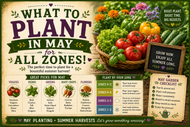
What to plant in May for all zones.
Posted by Jennifer Dixon on 18th May 2025
What to Plant in May by USDA Hardiness Zone
May is a busy month for gardeners as temperatures rise and the threat of frost begins to fade. What you can plant, however, depends greatly on your USDA Hardiness Zone. Some areas are still enjoying cool spring weather, while others are already moving into summer growing conditions. Use your zone as a starting point, but always consider your local weather and last frost date.
Zone 3–4: Cooler Climates
In Zones 3 and 4, the last frost date may not arrive until mid to late May. Early in the month, focus on crops that can tolerate cooler temperatures, and wait until the danger of frost has passed before planting warm-season crops.
Vegetables
- Leafy Greens: Lettuce, spinach, and kale can be sown directly into the garden.
- Root Vegetables: Carrots, beets, and radishes are good choices for direct sowing.
- Cool-Season Crops: Peas and broccoli can be planted early in the month, depending on local conditions.
Flowers
- Annuals: Marigolds can be planted once temperatures are suitable and the danger of frost has passed.
- Perennials: Hardy perennials such as yarrow and purple coneflower can be planted as conditions allow.
Zone 5–6: Transitional Climates
Zones 5 and 6 generally have a longer spring growing season, making May a good time to plant a wide variety of vegetables, herbs, and flowers. Keep an eye on the weather, especially if your area is still experiencing occasional cool nights.
Vegetables
- Warm-Season Crops: Tomatoes, peppers, and eggplants can be transplanted outdoors after the danger of frost has passed.
- Herbs: Basil, cilantro, and parsley can be planted in May.
- Beans and Corn: Direct sowing is a good option once the soil has warmed sufficiently.
Flowers
- Annuals: Zinnias can be planted once the soil and weather are warm enough.
Zone 7–8: Warmer Climates
Zones 7 and 8 typically have an earlier spring and a longer growing season. By May, many gardens are already well into the warm-season growing period, giving gardeners plenty of options for planting.
Vegetables
- Heat-Loving Crops: Squash, cucumbers, and melons can be sown directly into the garden once the soil is warm.
Zone 9–11: Hot Climates
In Zones 9–11, May can bring increasingly hot weather. Focus on crops that handle heat well, and keep soil moisture consistent as temperatures rise.
Vegetables
- Okra and Eggplant: Both crops thrive in warm conditions and can be planted in May.
- Pumpkins: Pumpkins can be planted now for a fall harvest, provided you have enough growing time for the variety you choose.
General Tips for Every Zone
- Prepare Your Soil: Work compost or other organic matter into your garden soil to help provide a healthy growing environment.
- Water Consistently: As temperatures rise, plants will need regular moisture. Water deeply when needed and pay attention to local water restrictions.
- Watch for Pests: Insects become more active as the weather warms. Inspect plants regularly and address pest problems early using garden-friendly management methods.
Make the Most of Your May Garden
May is an exciting month in the garden, but there is no single planting calendar that works everywhere. Your USDA Hardiness Zone, local frost dates, soil temperature, and current weather all play a role in determining what is ready to plant.
By planting according to your local conditions rather than the calendar alone, you can give your garden a stronger start and enjoy a productive growing season.
Related Gardening Guides
- Direct Sowing vs. Transplanting: Which Is Better for Your Vegetable Garden?
- Choosing the Right Herbs Based on Your Needs!
- Why Wildflowers Belong Near Vegetable Gardens
- Growing Guide for Chamomile
- 10 Easiest Vegetables to Grow for Beginner Gardeners
- The Forgotten Vegetables Making a Comeback in Southern Gardens