


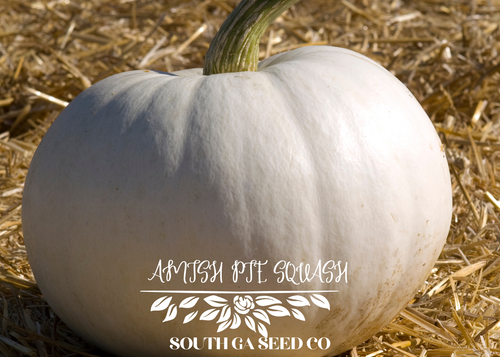
Amish Pie Squash is a truly remarkable heirloom variety belonging to the Cucurbitaceae family, cherished for its exceptional versatility and rich, delightful flavor. This squash is ideal for baking and cooking, making it a perfect ingredient for a wide range of dishes, including pies, soups, and roasted meals. Its adaptability in the kitchen allows chefs and home cooks alike to experiment with various recipes, ensuring that each dish is infused with its unique taste and texture.
The fruits of the Amish Pie Squash are impressively large, often reaching up to 60 pounds, making them a striking addition to any harvest display. Their size is not only a testament to their grandeur but also provides ample flesh for numerous culinary creations. The squash boasts a smooth, bright whitish skin that is both visually appealing and functional, protecting the sweet, dense flesh inside. This dense flesh is particularly praised for its ability to retain moisture and flavor, making it an excellent choice for long cooking processes.
Moreover, the Amish Pie Squash is known for its exceptional storage capabilities, allowing it to be kept throughout the winter months without losing its quality. This makes it a valuable resource during the colder seasons when fresh produce is less abundant. Its ability to store well means that families can enjoy its delightful taste and nutritional benefits long after the harvest season has ended. Whether used in traditional recipes or innovative culinary creations, the Amish Pie Squash continues to be a beloved choice for those seeking both flavor and versatility in their cooking endeavors. C. Maxima
- QTY. 12
- Seed Planting Depth: 1 to 1.5"
- Germination Temperature: 70-85
- Days to Germination: 3-10
- 100' yield: 100 lbs
- Row Spacing: 48"
- Plant Spacing: 24"-36"
- Sun: Full
How to Save Seeds
Pumpkins are actually from the squash family. So they will cross will different types of squash. There are 4 groups of commonly grown varieties of squash. Cucurbita pepo, Cucurbita Maxima, Cucurbita moschata, Cucurbita mixta. With this in mind any variety from the same species or in other terms with the same last name of the 4 species listed above will cross and must be separated 500ft. For instance you can't grow two pepo varieties together or they will cross. Side note: Be sure to check what type of squash you have in order to determine cross pollination chances. Squash and pumpkins can be seed harvested the same way. Let them stay on the vine until fall and then cut off the vine let sit for a week and then cut them open scoop out flesh and place in water. Wash seeds and place them on a screen rack for drying or paper. Turn often so they are able to fully dry a week or so and then properly them store accordingly.


