


★ Organically grown on our farm
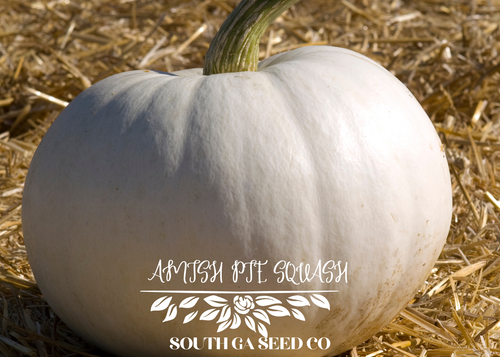
Amish Pie Squash is a prized heirloom variety known for its rich flavor, exceptional versatility, and impressive size. Belonging to the Cucurbita maxima species, this squash is highly valued for baking, roasting, soups, and especially homemade pies. Its sweet, dense flesh delivers outstanding texture and flavor, making it a favorite among gardeners, bakers, and home cooks alike.
Producing massive fruits that can reach up to 60 pounds, Amish Pie Squash makes a striking addition to both the garden and harvest displays. The smooth, pale whitish skin protects the flavorful interior while providing excellent storage qualities for long-term use throughout the winter months.
Known for its dependable productivity and outstanding keeping ability, Amish Pie Squash stores exceptionally well without sacrificing flavor or texture. Whether used in traditional recipes or creative seasonal dishes, this heirloom squash remains a timeless favorite for fall and winter cooking.
Amish Pie Squash Seed Details
- Quantity: 12 Seeds
- Seed Planting Depth: 1–1.5 Inches
- Germination Temperature: 70–85°F
- Days to Germination: 3–10 Days
- 100-Foot Yield: Approx. 100 lbs
- Row Spacing: 48 Inches
- Plant Spacing: 24–36 Inches
- Sun Requirements: Full Sun
- Species: Cucurbita maxima
How to Save Amish Pie Squash Seeds
Amish Pie Squash belongs to the squash family and may cross-pollinate with other squash varieties within the same species. Squash varieties are grouped into four primary species: Cucurbita pepo, Cucurbita maxima, Cucurbita moschata, and Cucurbita mixta. Varieties within the same species can cross-pollinate and should be separated by at least 500 feet to maintain seed purity.
Since Amish Pie Squash is a Cucurbita maxima variety, avoid growing it near other C. maxima squash if you plan to save seeds. Always verify the species of nearby squash varieties to reduce the risk of cross-pollination.
For seed saving, allow Amish Pie Squash fruits to fully mature on the vine until fall harvest. After harvesting, cure the squash for about one week before cutting it open. Scoop out the seeds and rinse them thoroughly in water to remove excess pulp.
Spread cleaned seeds on a screen, paper towel, or drying rack in a well-ventilated area. Turn seeds occasionally and allow them to dry completely for approximately one week before storing them in a cool, dry place for future planting.


