
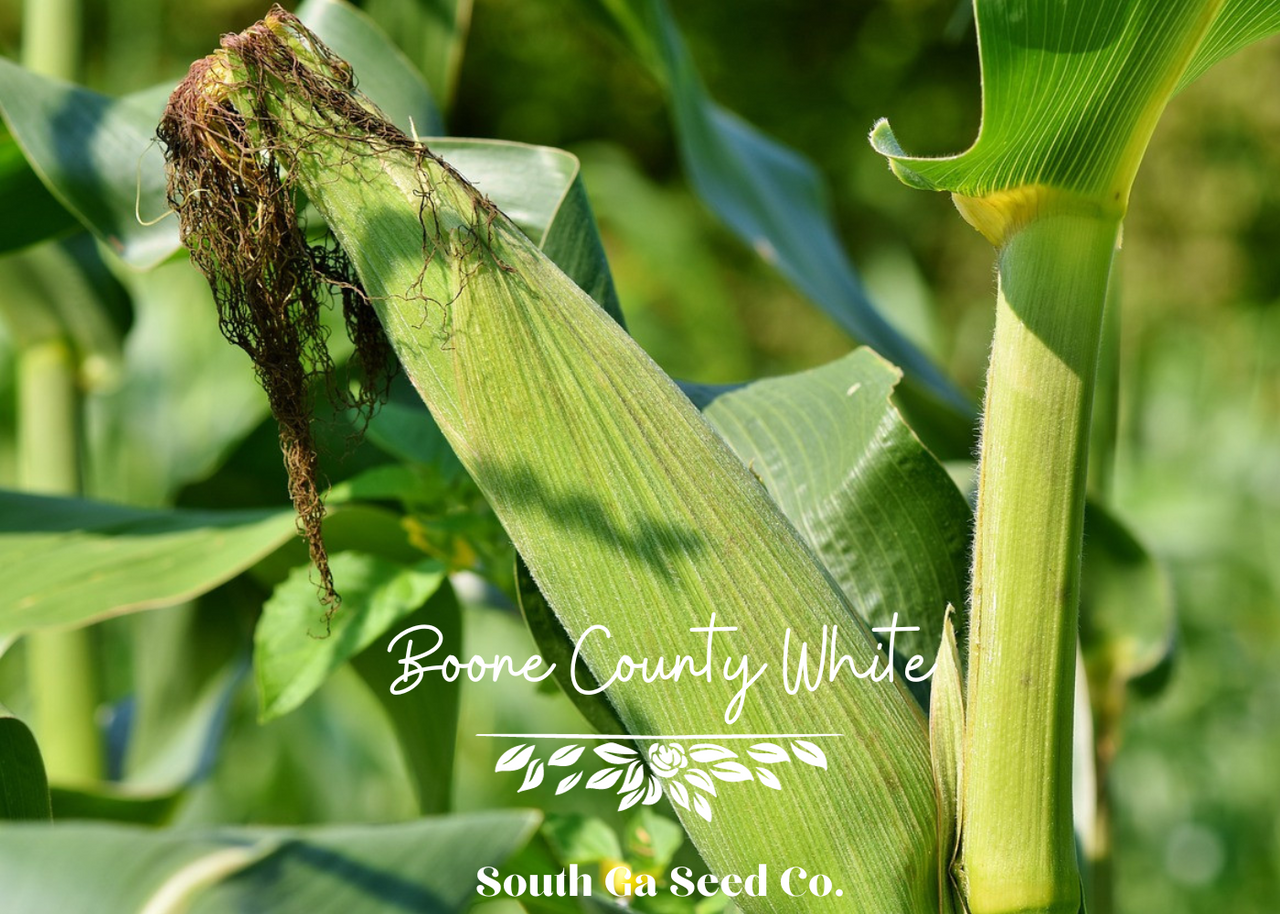

Boone County White Corn is a treasured American heirloom corn variety known for its rich agricultural history, dependable productivity, and outstanding flavor. Originally developed in Boone County, Indiana during the late 1800s, this open-pollinated variety became highly valued for its adaptability, vigorous growth, and ability to thrive across a wide range of growing conditions.
Unlike modern hybrid corn, Boone County White Corn can be replanted year after year while maintaining its traditional characteristics. This makes it especially popular among homesteaders, heirloom gardeners, small farmers, and seed savers dedicated to preserving heritage crops.
Its large white kernels are starchy, flavorful, and highly versatile in the kitchen. Boone County White Corn is excellent for grinding into cornmeal, making hominy, grits, tortillas, breads, and many traditional Southern and Appalachian dishes. The authentic old-fashioned flavor and texture make this variety a favorite for both fresh use and long-term storage.
This heirloom field corn grows tall sturdy stalks with reliable yields and performs best in fertile soil with full sunlight and warm growing conditions.
Boone County White Corn Seed Details
- Quantity: 25 Seeds
- Plant Type: Heirloom Field Corn
- Kernel Color: White
- Flavor: Rich Traditional Corn Flavor
- Growth Habit: Tall Productive Stalks
- Seed Planting Depth: 1-2 Inches
- Germination Temperature: 70-80°F
- Days to Germination: 4-8 Days
- Row Spacing: 12-24 Inches
- Plant Spacing: 6-8 Inches
- 100' Row Yield: 15 Pounds
- Sun Requirements: Full Sun
- Harvest Time: Approximately 95 Days
- Ideal Uses: Cornmeal, Hominy, Grits, Tortillas, Breads, Heirloom Gardens, Homesteads, Sustainable Farming
How to Save Seeds
Corn readily cross-pollinates with other corn varieties, so isolation is essential for maintaining seed purity. Separate different corn varieties by at least 1 mile whenever possible.
Allow ears to dry completely on the stalk before harvesting, but do not leave mature ears exposed to excessive moisture or wet weather for long periods.
For maintaining strong healthy genetics, collect seed from at least 100 separate corn plants whenever possible.
Once fully dry, shell the kernels from the cobs and store the cleaned seeds in labeled airtight containers in a cool dry location until the next planting season.


