
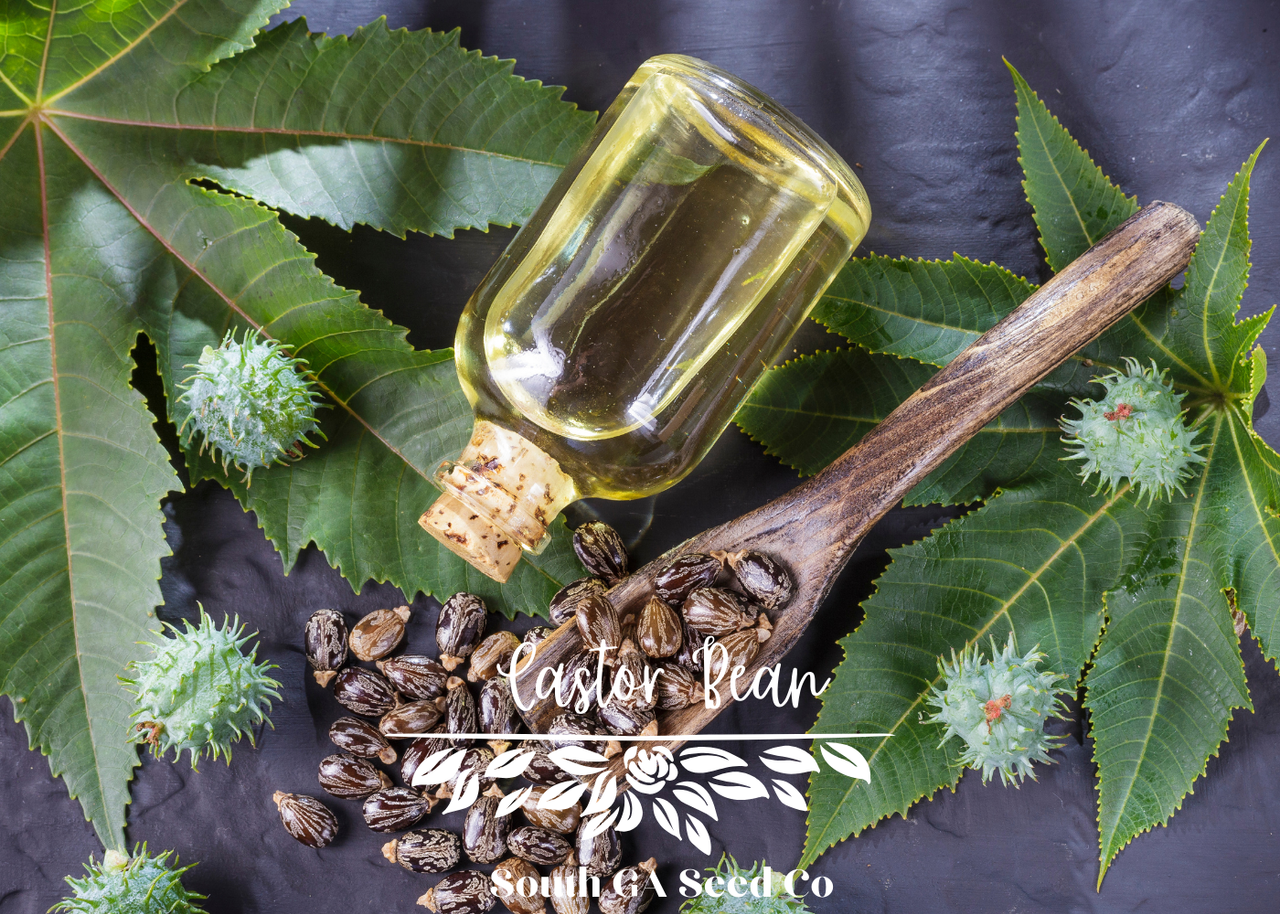

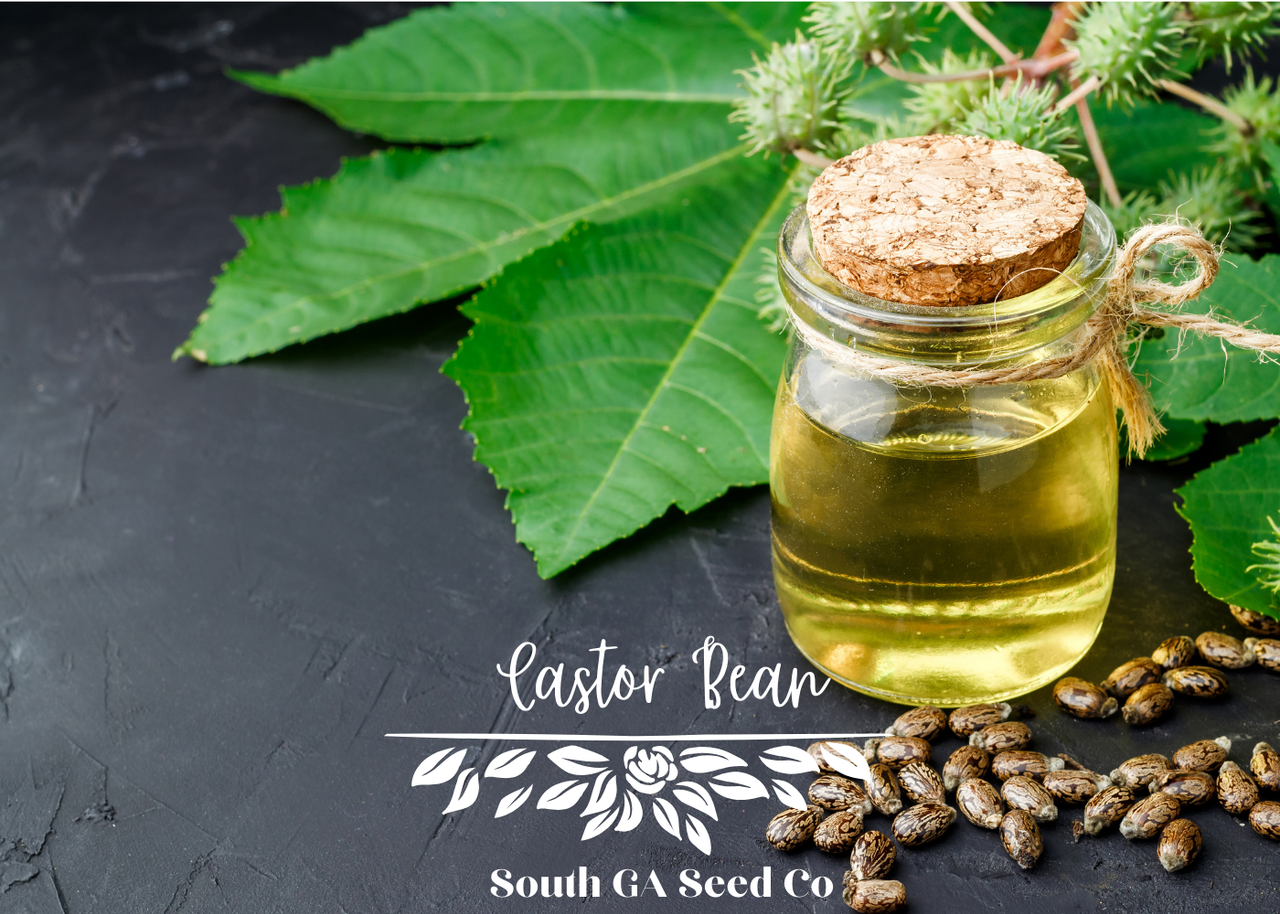

Castor Beans are NOT edible and are not for human consumption. Handle with extreme care.
Castor Bean plants (Ricinus communis) are dramatic ornamental plants admired for their bold tropical appearance and striking foliage. Native to tropical regions of Africa and the Middle East, these fast-growing plants feature large palmate leaves and tall colorful stems that create an eye-catching focal point in gardens and landscapes.
Highly valued for their architectural beauty, Castor Bean plants can quickly reach impressive heights and add an exotic atmosphere to flower beds, borders, and decorative garden spaces. Their lush foliage ranges from deep green to bronze and reddish-purple tones depending on the variety.
Castor Bean seeds are known for producing castor oil; however, the seeds and plant parts contain ricin, a highly toxic compound. Due to their toxicity, Castor Beans should always be handled responsibly and kept away from children, pets, and livestock.
Castor Bean Seed Details
- Quantity: 10 Seeds
- Sun Requirements: Full Sun
- Plant Type: Annual or Tender Perennial
- Plant Height: Up to 12 Feet
- Soil Type: Well-Drained Fertile Soil
- Growth Habit: Fast Growing
How to Grow Castor Bean Plants
Castor Bean plants thrive in warm sunny locations with fertile well-drained soil. Sow seeds approximately 1 inch deep after all danger of frost has passed, spacing plants 2 to 3 feet apart to allow room for their large mature size.
Keep the soil consistently moist during germination and early growth, but avoid overwatering or soggy conditions. Once established, Castor Bean plants grow rapidly and benefit from regular feeding with organic fertilizer to encourage vigorous foliage and strong stems.
By late summer, Castor Bean plants produce decorative spiny seed pods that add further visual interest to the garden. Because all parts of the plant are toxic, always wear gloves when handling seeds or seed pods and wash hands thoroughly afterward.


