
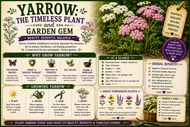
“Yarrow: The Timeless Plant and Garden Gem”
Posted by Jennifer Dixon on 3rd Jan 2026
Yarrow (Achillea millefolium)
Yarrow, scientifically known as Achillea millefolium, is a hardy perennial herb belonging to the Asteraceae family. Known for its finely textured foliage and clusters of small flowers, yarrow has a long history in gardens, traditional herbal practices, and folklore. Native to temperate regions of the Northern Hemisphere, it has become valued as both an ornamental plant and a useful addition to natural and wildlife-friendly gardens.
Yarrow has been associated with healing traditions for centuries. Its botanical name is often connected with Achilles, the legendary Greek hero, who is said to have used the plant to tend wounds. Across different cultures, yarrow has been traditionally used in herbal preparations, including teas and poultices. These historical uses are an important part of yarrow's long-standing place in traditional herbal knowledge, although traditional uses should not be considered medical advice.
Growing Yarrow in the Garden
Yarrow is an easy-to-grow perennial that performs well in a variety of garden settings. It prefers well-drained soil and full sun, and once established, it is notably tolerant of dry conditions. Its feathery foliage provides attractive texture throughout the growing season, while its flat clusters of small flowers add a delicate, natural look to flower beds, cottage gardens, rock gardens, and wildflower plantings.
The flowers may appear in shades of white, pink, yellow, and other soft tones depending on the variety. Yarrow is also a valuable plant for pollinator-friendly gardens, where its flowers can attract bees, butterflies, and other beneficial insects.
Uses for Yarrow
Beyond its ornamental value, yarrow has a variety of traditional and practical uses. Its leaves and flowers have historically been used in herbal teas and other preparations. Yarrow has also been included in traditional cosmetic and skincare preparations.
For gardeners interested in creating a more diverse and wildlife-friendly landscape, yarrow is especially useful because it combines attractive flowers with relatively low maintenance requirements.
How to Grow Yarrow
Plant yarrow in a location that receives plenty of sunlight and has well-drained soil. Keep newly planted seeds or young plants consistently watered while they become established. Once mature, yarrow is relatively drought tolerant and generally requires little maintenance.
Because yarrow spreads readily once established, give plants enough room to grow and consider its mature size when choosing a planting location. Removing spent flower heads can help maintain a tidy appearance and may encourage additional flowering.
Why Grow Yarrow?
Yarrow is a wonderful choice for gardeners looking for a tough, versatile perennial with plenty of character. Its fine foliage, long-lasting flowers, traditional history, and appeal to pollinators make it a useful addition to both ornamental and natural-style gardens.
Whether you are growing yarrow for its beauty, its place in traditional herbal history, or its value in a pollinator garden, this resilient perennial is a worthwhile plant to include in the landscape.
To order Yarrow seeds, click here.
Related Gardening Guides
- Why Old Gardens Smelled Different
- Why Wildflowers Belong Near Vegetable Gardens
- Broadleaf Plantain: The Healing Herb Once Called “White Man’s Footprint”
- The Forgotten Vegetables Making a Comeback in Southern Gardens
- The Lost Art of Seed Saving in Southern Gardens
- Preventing Powdery Mildew on Squash Family Plants