
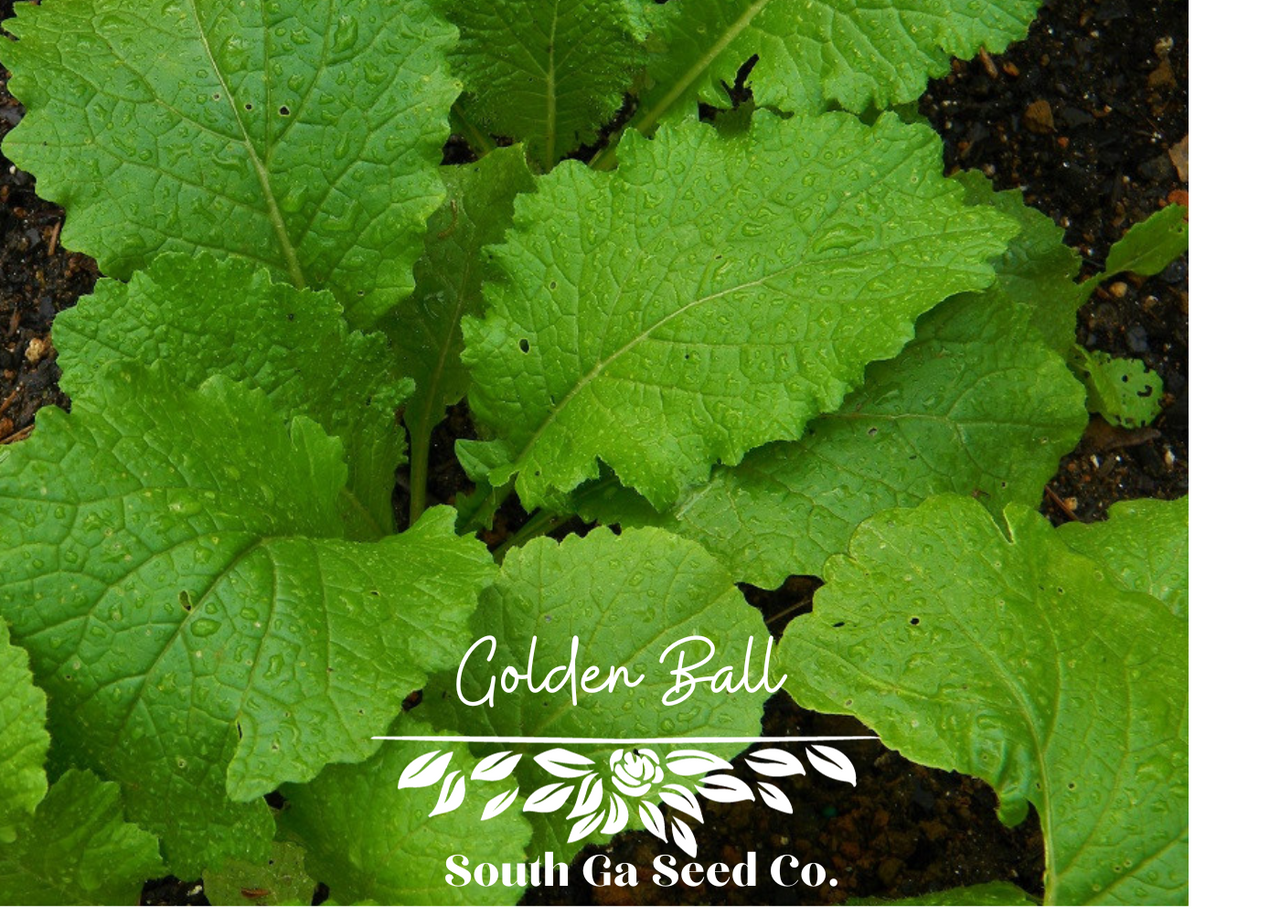

Golden Ball turnip, scientifically known as Brassica rapa var. rapa, is a treasured heirloom root vegetable admired for its beautiful golden-yellow roots, tender texture, and exceptionally mild sweet flavor. Unlike stronger traditional turnips, this variety produces smooth delicate roots that are especially prized for their versatility and pleasant taste.
The round golden roots are tender and flavorful whether roasted, mashed, sautéed, or eaten fresh in salads. Their naturally mild sweetness pairs wonderfully with both savory and sweet dishes, making them an excellent addition to soups, stews, roasted vegetable blends, and fresh seasonal meals. The nutritious leafy greens are also edible and can be prepared similarly to spinach or kale.
Golden Ball turnips thrive in cool growing conditions and perform best in fertile well-drained soil rich in organic matter. Consistent moisture encourages rapid healthy root development while helping maintain the tender smooth texture that makes this heirloom variety so highly regarded among gardeners and cooks alike.
Tender, flavorful, and easy to grow, Golden Ball turnip remains a dependable heirloom favorite for gardeners seeking delicious cool-season root crops with excellent culinary versatility.
Golden Ball Turnip Seed Details
- Quantity: 500 Seeds
- Plant Type: Heirloom Turnip
- Botanical Name: Brassica rapa var. rapa
- Root Color: Golden Yellow
- Flavor: Mild, Slightly Sweet, Tender
- Best Uses: Roasting, Mashing, Soups, Salads, Fresh Greens
- Seed Planting Depth: 1/4-1/2 Inch
- Germination Temperature: 65-75°F
- Days to Germination: 7-14 Days
- Row Spacing: 24-30 Inches
- Plant Spacing: 4-6 Inches
- 100' Row Yield: 45 Pounds
- Sun Requirements: Full Sun
- Harvest Time: Approximately 65 Days
- Special Features: Tender Texture, Mild Flavor, Edible Greens
How to Save Seeds
Separate turnips from other plants within the Brassica rapa species to maintain seed purity and prevent unwanted cross-pollination.
Turnips are biennial plants and typically require overwintering before they produce seeds. In colder climates, heavily mulch plants or trim foliage to approximately 2 inches above the roots and store them in damp sand or sawdust within a cool root cellar.
Replant stored roots in spring and allow plants to flower and develop seed pods during the second growing season.
Once seed pods fully dry on the plants, harvest and shell the seeds before storing them in a cool dry location for future planting.